
Wholesale Skincare and Equipment Pairing for Salons: Post-Treatment Recovery, Infusion Treatments and Average Transaction Value Design
When salons buy wholesale skincare, the first questions are often "how big is the discount", "is there an in-salon range (院裝)" and "how much margin is there on the retail range (客裝)". But for a salon already running equipment-based treatments, the more important questions are really these: can this range work with the cleansing, infusion, HIFU, RF, RF microneedling, laser or other advanced treatments offered in the salon? Is there a recovery pairing after the treatment? Is there a reasonable home-care extension once the client goes home? And could the marketing wording turn an ordinary skincare product into a medical treatment?
This article sets out, from a Hong Kong salon operating perspective, a purchasing approach to wholesale skincare and beauty-equipment pairing, to help salons link in-salon products, equipment treatments and retail sales into a more stable average transaction value design.
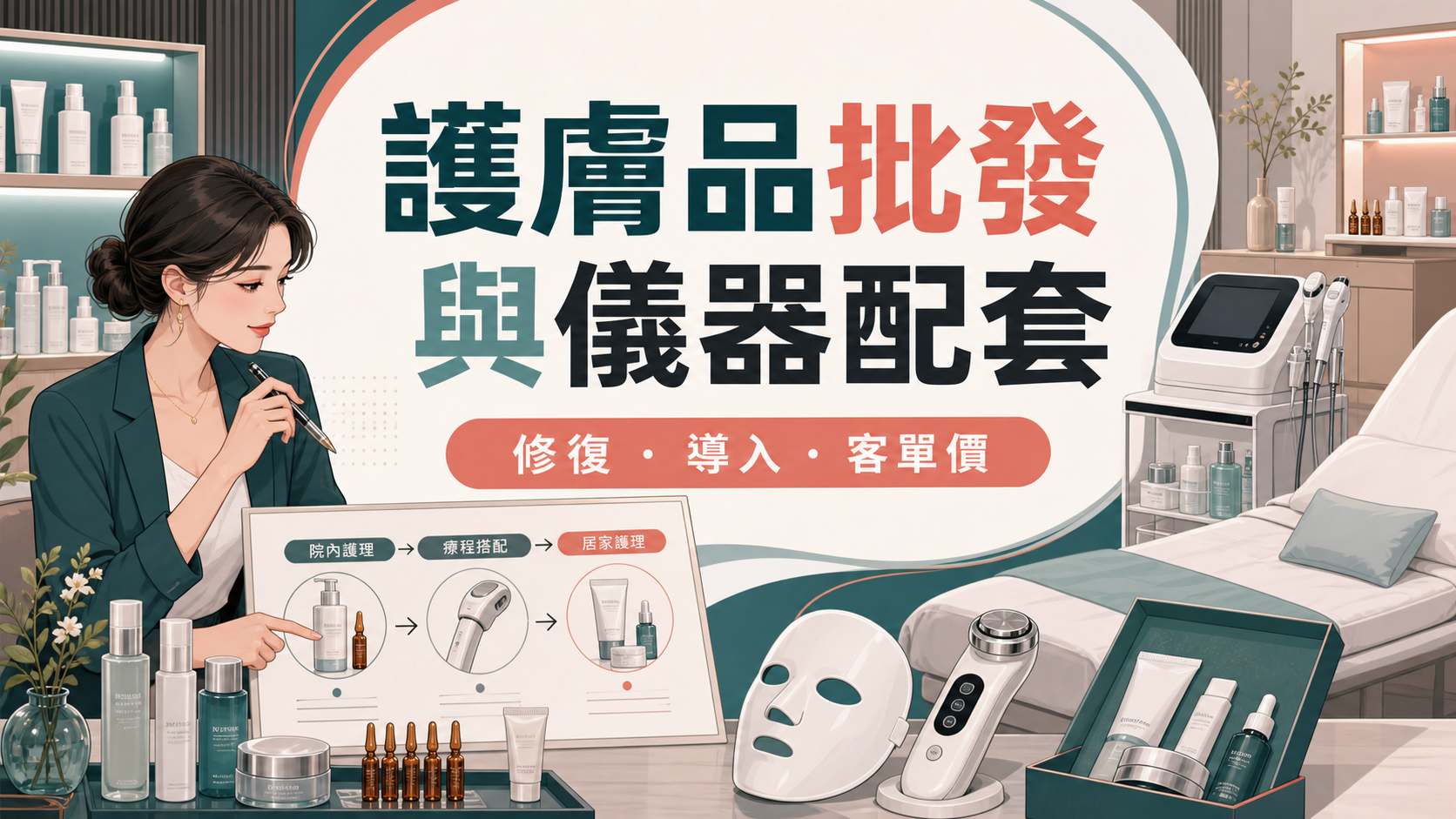
Why does "buying equipment without matching products" discount the treatment?
Beauty equipment can give a salon differentiation, but equipment is not a standalone item. Many treatments briefly change the condition of the skin: for example, the stratum corneum is thinner after deep cleansing, the skin is drier after RF or HIFU, absorption needs increase after infusion, and more careful soothing and barrier care is needed after microneedling or high-energy items.
If a salon only sells one-off equipment treatments without matched soothing, moisturising, barrier-repair products and home-care education, clients may interpret post-treatment dryness, redness, tightness or short-term sensitivity as unstable results. Conversely, if the in-salon and retail products are well designed, the salon can raise its average transaction value in a more professional way while reducing client misunderstanding and after-sales pressure.
Skincare purchasing priorities across the three treatment stages
| Treatment stage | Common equipment | In-salon wholesale priorities | Retail direction |
|---|---|---|---|
| Deep cleansing and resurfacing | Hydro-oxygen, cleansing, pre-infusion preparation | Gentle cleansing, soothing modelling masks, low-irritation moisturisers | Gentle cleansers, moisturising serums, daily sun protection |
| High-energy anti-ageing | HIFU, RF, skin tightening, laser | Conductive gel, cold compress, barrier repair, soothing masks | Repair creams, moisturising masks, sun protection |
| Infusion and recovery | Electroporation, ultrasound infusion, needle-free mesotherapy (無針水光) | Low-irritation infusion serums, PDRN, peptides, hyaluronic acid | Serums, creams, recovery sets |
The point of these pairings is not to package skincare products as medical products, but to give the salon a reasonable basis for extending the "in-salon treatment" into a "post-treatment care plan".
Deep cleansing and resurfacing: products should be gentle, not as harsh as possible
Hydro-oxygen, hydrodermabrasion (小氣泡), extraction, cleansing and gentle resurfacing treatments are usually a salon's entry-level items. Client acceptance is high, repeat purchase frequency is relatively close, and they suit pairing with basic skincare retail.
Points to watch when purchasing:
- Whether the cleansing products suit different skin types.
- Whether extraction solutions and exfoliating conditioners have clear ingredient information.
- Whether soothing modelling masks and moisturising masks fit easily into the treatment flow.
- Whether there are retail cleansers, moisturisers and sun protection for home-care extension.
- Whether the supplier provides treatment SOPs and therapist training.
Do not simply chase a strong sensation. If a formulation is too irritating, it can instead trigger redness, stinging or complaints.
HIFU, RF and skin-tightening treatments: post-treatment recovery should become a standard pairing
HIFU, MMFU, RF, RF microneedling, skin tightening and laser items usually carry a higher transaction value, but they also place higher demands on post-treatment care and expectation management. Salons can design recovery products in three layers:
| Pairing layer | Product examples | Operational role |
|---|---|---|
| Immediate soothing | Cold compress, soothing gel, moisturising mask | Reduces post-treatment dryness and discomfort |
| Barrier repair | Ceramide, hyaluronic acid, centella-type products | Supports post-treatment moisturising and barrier care |
| Home-care extension | Repair cream, sun protection, moisturising serum | Raises average transaction value and continuity of care at home |
Marketing for this kind of product should focus on moisturising, soothing, barrier care and appearance management, and should not be written as treating skin disease or guaranteeing treatment results.
Infusion serums, PDRN and exosomes: first distinguish beauty care from medical claims
PDRN, peptides, EGF, exosome and stem-cell concept products have drawn a lot of salon interest in recent years. These ingredients can become part of a premium care story, but Hong Kong salons need to be very careful when purchasing and marketing them.
The basic principles are:
- General topical skincare products should be positioned as moisturising, repairing, soothing or skin-condition management.
- They should not be claimed to treat disease, rebuild human tissue or guarantee cell regeneration.
- Claims involving human cells, tissue, genes or advanced therapy products should be understood in line with the regulation of pharmaceutical products and advanced therapies.
- Persons who are not registered doctors should not perform injections or other regulated medical procedures.
- For infusion-type products, watch ingredient transparency, packaging, storage conditions and supplier documentation.
If a supplier mixes together wording such as "exosome", "stem cell", "regenerative treatment" and "injection", the salon should first stop and verify the actual nature of the product and how it may be used, rather than putting it straight into a treatment because it is popular in the market.
From in-salon to retail: using a closed-loop design to raise average transaction value
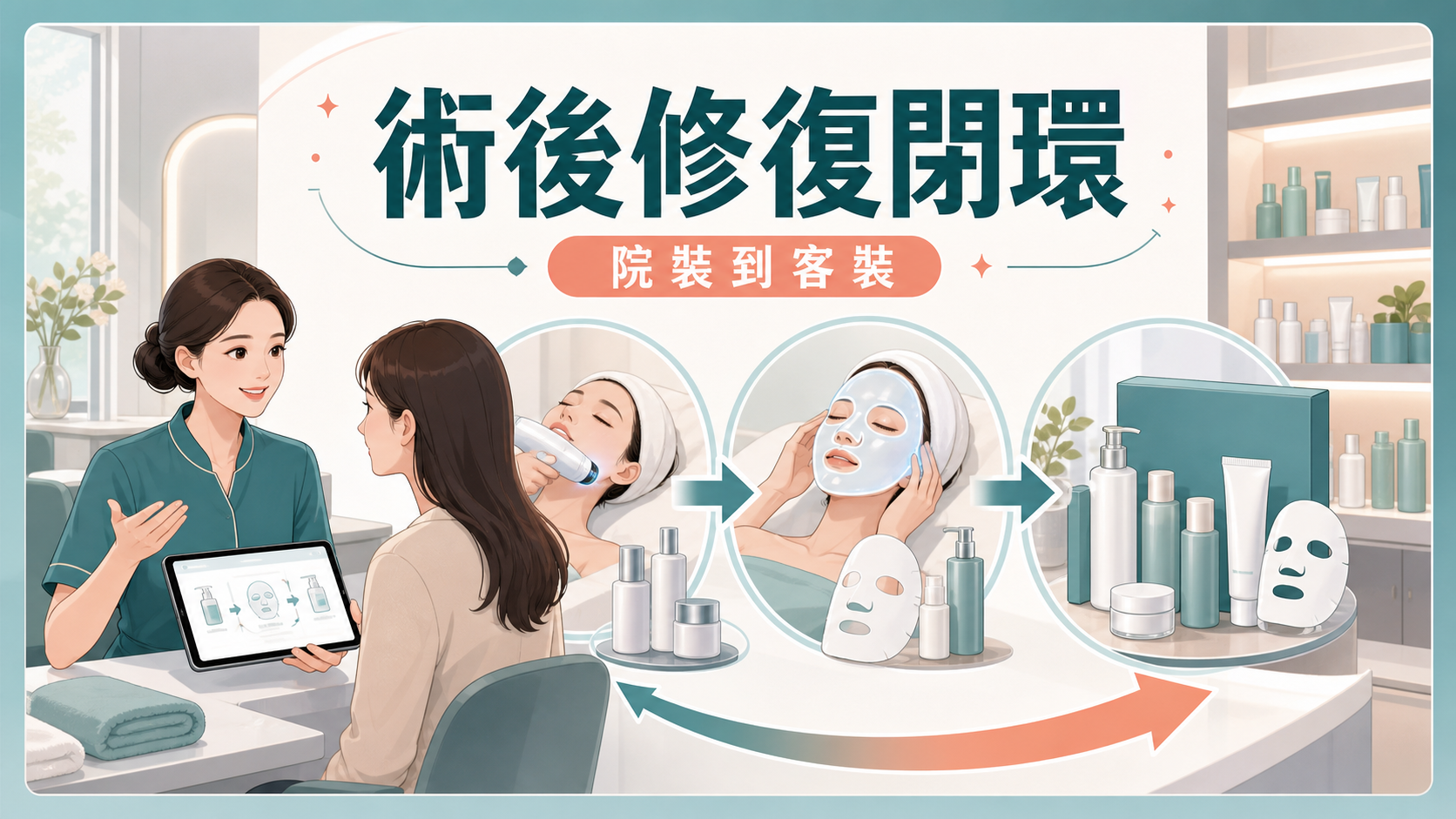
Raising average transaction value does not necessarily require hard selling. The more professional approach is to design the treatment as a complete closed loop:
- The in-salon equipment treatment delivers the core experience.
- In-salon recovery products handle immediate soothing and moisturising after the treatment.
- Retail products handle the home-care extension and care before the next salon visit.
- The next follow-up visit tracks progress using skin condition and photographic records.
For example, a HIFU or RF skin-tightening treatment can be designed as "equipment treatment + immediate cold compress + recovery mask + 30-day home-care repair set". What the client pays for is not a single block of equipment time, but a more complete care plan.
| Package tier | What is included | Suitable client group |
|---|---|---|
| Basic treatment | Equipment + basic soothing mask | Price-sensitive, first-time trial |
| Advanced treatment | Equipment + in-salon repair + retail serum | Has recovery needs, willing to follow the recommended care |
| Flagship package | Equipment treatment combination + 30-day home-care set + follow-up | High transaction value anti-ageing clients |
This kind of average transaction value design is more natural than suddenly pushing products after the treatment, and it is easier for clients to understand as part of professional care.
Five questions to ask suppliers when buying wholesale skincare
| Purchasing question | Why it matters |
|---|---|
| Is complete ingredient information provided? | Helps assess sensitivity, infusion and post-treatment use risks |
| Are there both an in-salon line and a retail line? | Supports the treatment and retail closed loop |
| Can treatment SOPs be provided? | Helps therapists work consistently |
| Is storage and shelf-life information available? | Avoids loss of active ingredients or stock risk |
| Is the marketing material compliant? | Avoids salons using high-risk medical wording directly |
For highly active products, repair-concept products, exosome, PDRN or infusion-type products, it is all the more important to clarify packaging, storage conditions, shelf life, batch and method of use.
Marketing wording pitfalls: be especially careful with exosome, stem cell and injection
When marketing skincare products alongside equipment treatments, salons should avoid the following high-risk wording:
- Treating eczema, acne, dermatitis or disease.
- Stem-cell regenerative treatment.
- Exosome injection.
- Guaranteed repair.
- Permanent improvement.
- Zero risk.
- Suitable for everyone.
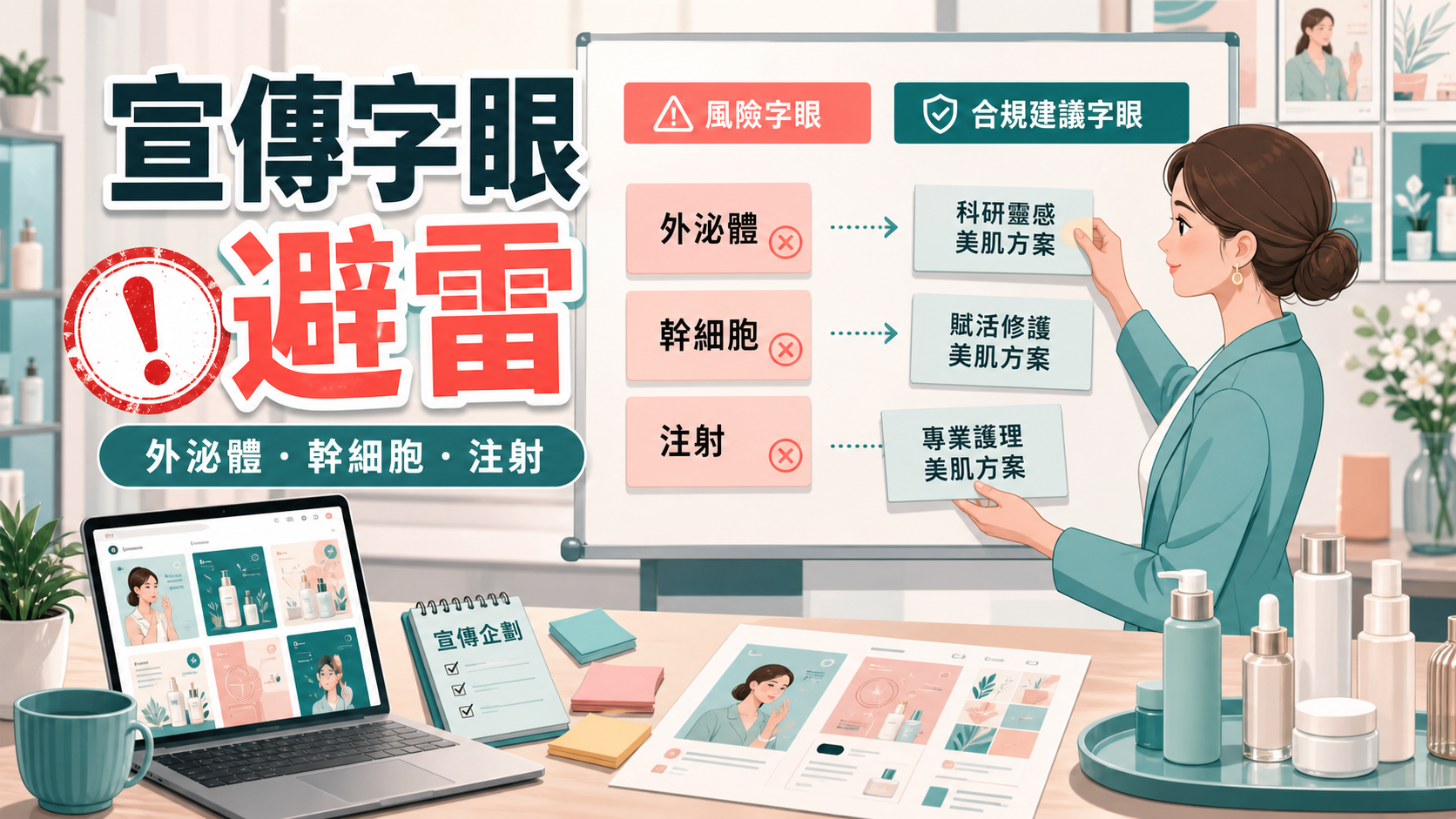
Safer wording could be:
| High-risk wording | Safer wording |
|---|---|
| Treats acne | Deep cleansing, improves the appearance of oiliness and pores |
| Cell regeneration | Skin-condition management and repair-concept care |
| Permanent lifting | Contour care and firm-looking appearance management |
| Injection repair | Topical repair or non-invasive infusion care |
| Guaranteed no sensitivity | Assessed according to skin condition before use; results vary from person to person |
Compliant marketing does not mean unattractive marketing. Its essence is to state things clearly, verifiably and in line with what the product actually does.
Stock, shelf life and temperature management should not be overlooked
Wholesale skincare differs from equipment purchasing: products have expiry dates, batches, storage conditions and stock-holding pressure. Salons should set up a basic inventory system:
- First in, first out.
- Record batches and expiry dates.
- Store highly active products as required by the supplier.
- Do not use products nearing expiry in high-risk treatments.
- Check the packaging and storage condition of retail products regularly.
- Confirm returns, exchanges and restocking arrangements with the supplier.
If a salon sells packages and only then finds the product is out of stock, or holds so much stock that expiry dates become too close, both client trust and cash flow are affected.
Frequently asked questions
For wholesale skincare, should a salon buy the in-salon range or the retail range first?
It is recommended to plan both together. The in-salon range serves the treatment flow; the retail range serves the home-care extension and retail margin. With only an in-salon range, there is not enough extension of average transaction value; with only a retail range, therapists find it harder to place products naturally within the treatment story.
Must recovery products be paired with HIFU or RF treatments?
It is recommended to provide at least moisturising, soothing, barrier care and sun-protection education. The actual pairing should be arranged according to the client's skin condition, the treatment energy, supplier guidance and therapist assessment.
Can exosome or stem-cell products be used in infusion treatments?
The product's source, ingredients, intended use and Hong Kong compliance risk must first be verified. Ordinary salons should not market such products as medical treatment, cell therapy or injection items. Where claims involve human cells, tissue or pharmaceutical products, the risk is higher still.
Will adding retail products to a treatment package make the price too high?
The key is to package it as a care loop rather than a hard sell. If the salon can explain clearly why moisturising, soothing, repair and sun protection are needed after a treatment, clients find it easier to understand the value of retail products.
Can the marketing images provided by a supplier be used directly?
Not necessarily. Salons should first check whether they contain high-risk wording such as guaranteed results, disease treatment, injection, permanent or zero risk. If in doubt, they should be rewritten into a more conservative beauty-care description.
Conclusion: wholesale skincare should be designed together with equipment treatments
Wholesale skincare for a salon is not about finding the cheapest goods, but about finding a supply solution that can support treatments, recovery, retail and compliant marketing. Only when in-salon products, retail products, equipment treatments and home care are linked into one system does it become easier for a salon to raise average transaction value, increase repeat purchases and reduce after-sales misunderstanding.
If you are planning wholesale skincare, medical skincare repair products or equipment treatment pairings, you may browse the medical skincare range and the beauty equipment range, or contact the Asia Pacific Beauty team to discuss your salon configuration.
References
- Hong Kong Department of Health: Differentiating medical procedures from beauty services
- Hong Kong Drug Office: Advanced therapy products frequently asked questions
- Hong Kong Customs and Excise Department: Trade Descriptions Ordinance consumer protection information
- Hong Kong Department of Health Medical Device Division: Medical Device Administrative Control System
- Hong Kong Consumer Council: Recommendations on the regulation of medical beauty services