
Hong Kong Beauty Equipment Supplier | Asia Pacific Beauty Group, ISO 9001 Since 1998
Choosing a beauty equipment supplier in Hong Kong should not start and end with the machine price. For salon owners, spa buyers and aesthetic business operators, the real purchase decision is whether the supplier can support demonstration, training, warranty, spare parts, documentation, after-sales service, treatment menu planning and compliant marketing materials.
Whether you operate a local salon, are opening a new spa, manage several branches or source equipment for an overseas market, define the support you need before requesting quotations. Some buyers need one machine; others need a full-room setup, English training, export documents or a dependable long-term supply of consumables. A clear brief makes supplier quotations much easier to compare.
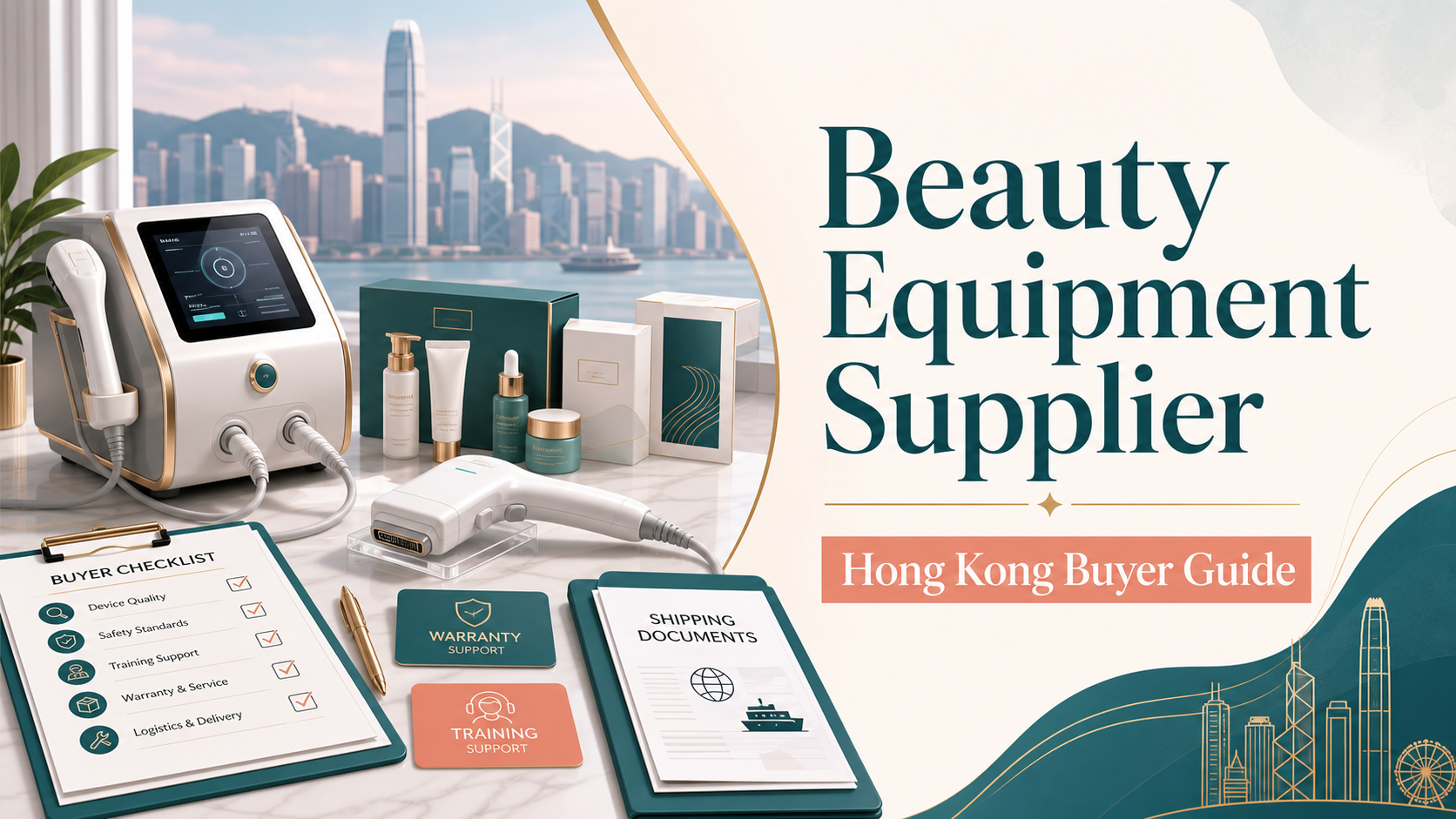
Why Hong Kong Beauty Equipment Buyers Need a Supplier Framework
Beauty devices are operational assets, not simple catalogue items. Once a device is installed in a salon, it affects treatment menus, staff training, room setup, consumable planning, client consultation, marketing claims and service downtime. A low purchase price may look attractive, but it can become expensive if the supplier cannot provide training, spare parts or responsive after-sales support.
Hong Kong also serves a bilingual and cross-border market. Local salons may need Chinese consultation materials, while overseas buyers may require English product summaries, export-ready documents and clear communication on warranty terms. A strong supplier should bridge both sides: practical local support and professional English communication.
Match the Supplier to Your Purchasing Scenario
Different buyers need different supplier capabilities. Before comparing brands, identify which of these purchasing scenarios is closest to yours.
Local salons and spas should prioritize in-person demonstrations, staff training, fast repair arrangements and reliable replenishment of consumables in Hong Kong.
New salons and businesses planning a full equipment refresh need more than individual product prices. They should ask for room requirements, electrical specifications, a phased delivery schedule, treatment-menu planning and training for the whole team.
Overseas distributors and cross-border buyers should verify brand authorization, English documentation, shipping and customs paperwork, warranty territory, spare-part supply and remote training arrangements.
Supplier Evaluation Checklist
Before comparing prices, salon buyers should ask six supplier questions.
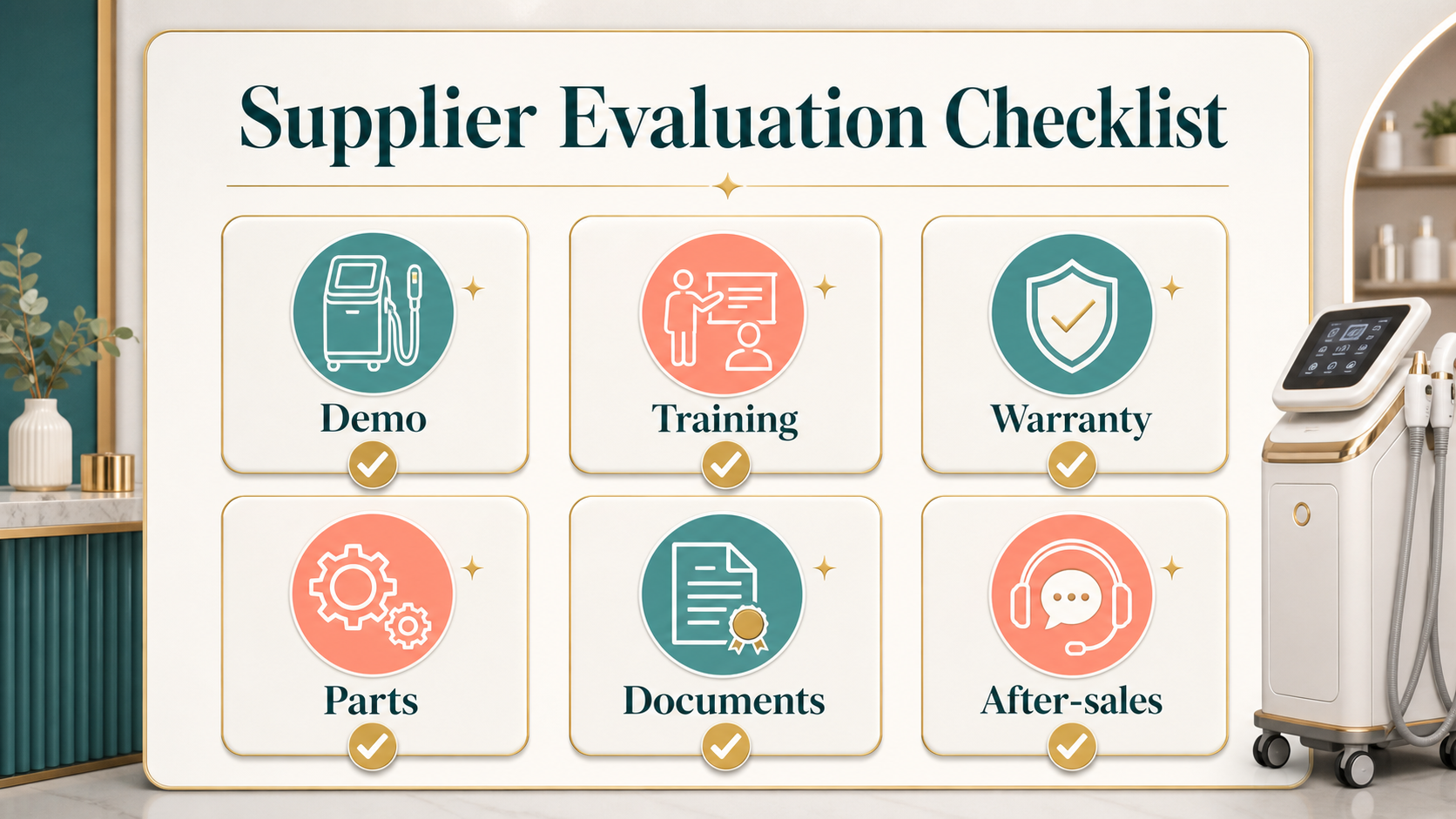
| Evaluation Area | What to Ask | Why It Matters |
|---|---|---|
| Demo | Can the supplier arrange an in-person or video demonstration? | Interface, treatment time and handling are difficult to judge from photos alone. |
| Training | Does training cover operation, contraindications and post-care advice? | Staff confidence directly affects treatment consistency and client experience. |
| Warranty | What is covered, how long is the warranty and what happens during downtime? | Machine downtime can affect bookings and revenue. |
| Parts | Are handpieces, filters, gels, tips and other consumables available long term? | A device without consumable support may become difficult to sell consistently. |
| Documents | Are manuals, product information and marketing materials available? | Documentation supports training, compliance review and overseas communication. |
| After-sales | Is there a local contact point and expected response time? | After-sales responsiveness is often more important than the initial discount. |
For a more detailed internal scorecard, buyers can also review Asia Pacific Beauty’s supplier evaluation framework and Hong Kong procurement process guide.
Product Categories a Hong Kong Supplier Should Explain Clearly
A strong supplier should explain how each category fits the buyer’s treatment menu, staff capability, room setup and revenue model. Start with the business goal, then compare devices and brands.
| Category | Typical Purchase Goal | Questions to Ask Before Buying |
|---|---|---|
| HIFU and ultrasound lifting | Add firming and lifting treatment options | Ask about energy settings, cartridge life, contraindications and training; review the HIFU agency and wholesale guide. |
| RF and microneedling RF | Add firming, texture or advanced professional treatments | Confirm operator requirements, consumables, cleaning procedures and compliance boundaries; review the RF microneedling distributor guide. |
| Body contouring devices | Build body-shaping treatment packages | Check room space, treatment time, staffing requirements and permitted outcome claims; review the salon equipment list and budget guide. |
| Korean beauty devices | Introduce a Korean treatment concept or brand | Verify authorization, voltage, warranty territory and source of replacement parts; review the Korean beauty device wholesale guide. |
| Skincare and post-care | Pair professional treatments with home care | Compare ingredients, treatment sequence, retail margin and replenishment; browse medical skincare products. |
| Full salon setup | Open a new location or refresh the complete menu | Ask for budget allocation, electrical and space planning, training schedules and phased delivery; browse professional beauty instruments. |
Devices within the same category can have very different operating requirements and consumable costs. During a demonstration, ask the supplier to show a realistic treatment workflow rather than only the machine body and touchscreen.
Compliance: Avoid Turning Beauty Equipment Into Medical Treatment
Marketing claim safety is a major issue for Hong Kong beauty businesses. Suppliers and salons should be aware of the Trade Descriptions Ordinance, unfair trade practice rules, the Undesirable Medical Advertisements Ordinance and the Department of Health’s distinction between medical procedures and beauty services.
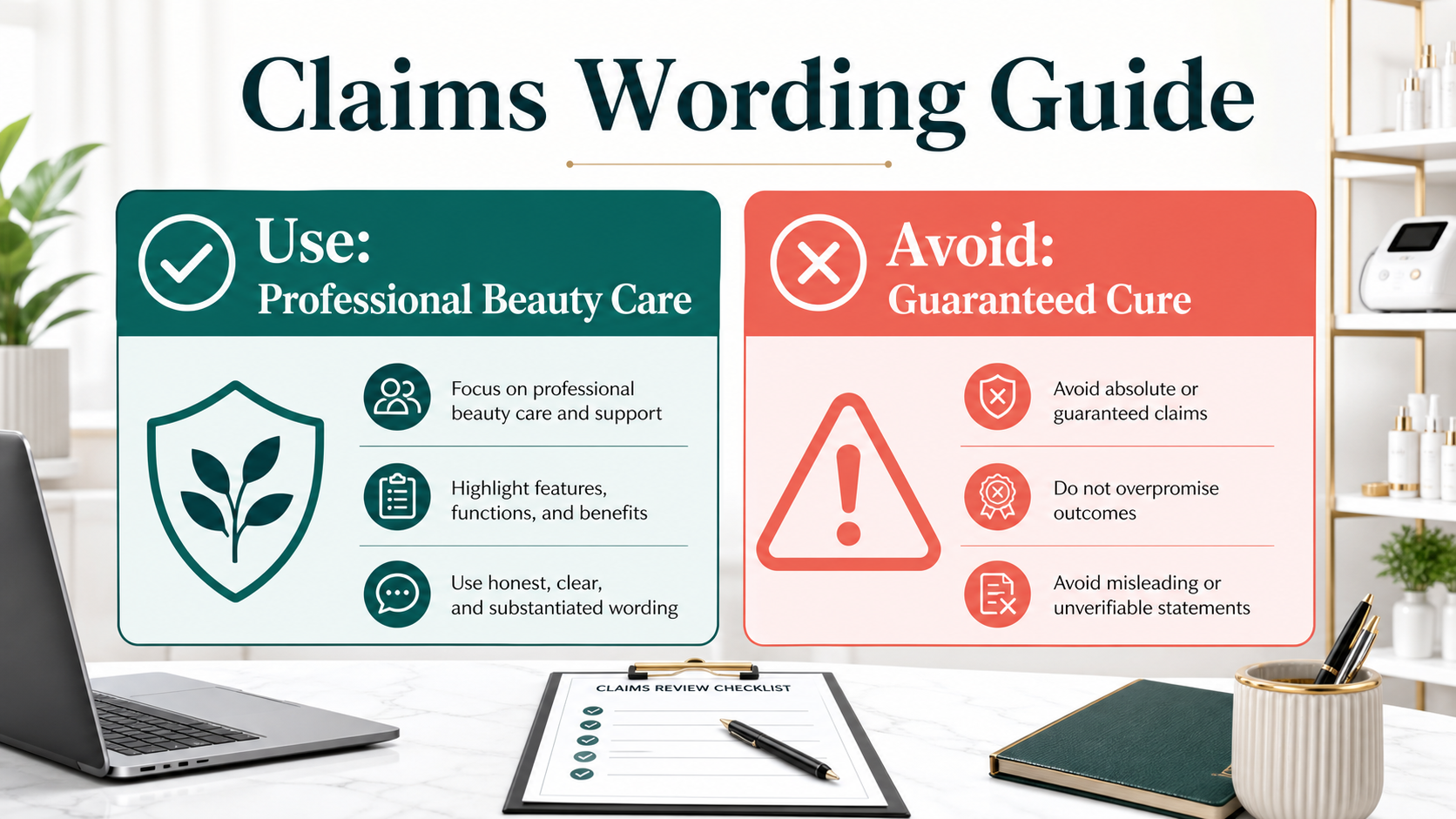
| Risky Claim | Why It Is Risky | Safer Direction |
|---|---|---|
| Guaranteed results | Absolute claims are difficult to substantiate for every client. | Results may vary by client condition. |
| Medical grade cure | This may imply medical treatment or disease management. | Designed for professional beauty care. |
| Permanent slimming | Permanent body outcome claims are high risk. | Supports body contouring treatment menus. |
| Pain treatment | Pain treatment may cross into medical-service territory. | Relaxing beauty care experience. |
| Risk-free | It ignores contraindications and individual differences. | Consultation and training are recommended. |
Suppliers should localize marketing materials before salons use them publicly. Overseas brochures, overseas certifications or trade-show wording should not be copied directly into Hong Kong advertisements without claim review. If the salon uses before-and-after images, influencer content or limited-time offers, the beauty salon marketing compliance guide is a useful next read.
What English Buyers Should Prepare Before Contacting a Supplier
English-speaking buyers can speed up the quotation process by preparing the following information:
- Business type: salon, spa, distributor, clinic-adjacent beauty business or new startup.
- Target treatment category: lifting, RF, body contouring, facial, skincare pairing or full setup.
- Current equipment and treatment menu.
- Budget range and expected timeline.
- Training needs and preferred language.
- Warranty, spare-part and consumable expectations.
- Whether export, shipping or distributor cooperation is required.
- Marketing claim sensitivity in the buyer’s local market.
The more specific the enquiry, the easier it is for a supplier to recommend the correct product category and support package.
Practical Buying Process
Salon and spa buyers can use this process when evaluating a beauty equipment supplier in Hong Kong:
- Define the business goal, such as facial lifting, body contouring, recovery skincare or a full salon setup.
- Shortlist product categories before comparing brands.
- Request a demo, training outline and warranty terms.
- Compare total cost, including consumables, parts, maintenance, staff time and downtime risk.
- Review marketing wording for guaranteed results, medical claims and misleading omissions.
- Confirm quotation, payment, delivery and after-sales contact details.
- Decide whether the supplier is suitable for one purchase or a long-term partnership.
If the buyer wants to combine equipment with post-treatment skincare, the skincare and equipment pairing guide and equipment ROI guide provide additional planning angles.
FAQ
What makes a reliable beauty equipment supplier in Hong Kong?
A reliable supplier should provide clear product information, demonstration options, staff training, warranty terms, spare-part or consumable support, documentation and responsive after-sales service. For overseas buyers, English communication and shipping support are also important.
Should a salon choose the cheapest beauty machine?
Not usually. The lowest machine price may not include training, warranty, consumables or responsive support. Buyers should compare the total cost of ownership and the supplier’s ability to support daily salon operations.
Can a supplier claim that a beauty device is FDA approved or medical grade?
Only if the supplier has clear, applicable and verifiable documentation. Even then, salons should check whether the claim is suitable for the Hong Kong beauty-service context. Safer wording includes professional beauty equipment, designed for salon use and training is recommended.
What should overseas buyers include in an enquiry?
Overseas buyers should include their market, business type, target treatments, budget range, existing devices, training needs, preferred language and whether export or distributor cooperation is required.
Conclusion
The best beauty equipment supplier is not necessarily the one with the lowest quotation. It is the supplier whose equipment fits your treatment goals and whose team can support demonstrations, training, consumables, repairs and documentation over the working life of the machine. Put these commitments in the quotation or contract before paying a deposit.
To compare equipment, training or wholesale packages, browse Asia Pacific Beauty’s professional beauty instruments and medical skincare products. When contacting the team, include your business type, target treatments, budget and required delivery date so the discussion can focus on a workable setup.
This article provides general procurement information only. It is not legal advice, medical advice or a product-specific compliance determination.
References
- Hong Kong Customs: Trade Descriptions
- Hong Kong Customs: Unfair Trade Practices
- Drug Office: Undesirable Medical Advertisements Ordinance
- Department of Health: Differentiation between Medical Procedures and Beauty Services
- Consumer Council: Medical Beauty Service Risks
- PCPD: Direct Marketing Guidance
- Hong Kong e-Legislation: Cap. 362
- Hong Kong e-Legislation: Cap. 231
- Hong Kong e-Legislation: Cap. 456
- Hong Kong e-Legislation: Cap. 406G
- Hong Kong Customs: Cargo Clearance
- HKTDC Sourcing
- HKTDC Medical and Healthcare Fair
- Cosmoprof Asia
- HKCEC Event Calendar
- InvestHK: Consumer Products
- Global Wellness Institute: 2024 Global Wellness Economy Monitor
- Grand View Research: Beauty Devices Market
- Precedence Research: Beauty Devices Market
- FTC: Health Products Compliance Guidance
- FDA: Is It a Cosmetic, a Drug, or Both?
- FDA: Medical Devices
- European Commission: Medical Devices Regulation
- ISO 13485:2016
- ISO 9001 Quality Management
- IEC Standards
- GS1 Hong Kong
- Asia Pacific Beauty: Beauty Instruments
- Asia Pacific Beauty: Medical Skincare
- Asia Pacific Beauty: Supplier Evaluation Framework
- Asia Pacific Beauty: Procurement Process
- Asia Pacific Beauty: Korean Beauty Device Guide
- Asia Pacific Beauty: Skincare and Equipment Pairing
- Asia Pacific Beauty: Beauty Salon Marketing Compliance
- Asia Pacific Beauty: HIFU Agency Guide
- Asia Pacific Beauty: RF Microneedling Guide
- Asia Pacific Beauty: Contact