
Beauty Salon Start-Up Equipment List and Budget|Facial, Body, Anti-Ageing and Recovery Product Configuration
When opening a beauty salon in Hong Kong, the easiest place to misspend the budget is not the fit-out, nor the first batch of skincare, but the beauty equipment configuration. Many new salons begin by asking "How many machines should we buy?", "Should HIFU be in the first batch?", "Which pays back faster, body machines or facial machines?" But what really affects the business is whether you divide the equipment into core items, upgrade items and recovery retail add-ons according to salon type, clientele, treatment pricing, therapist capability and after-sales support.
This guide to beauty salon start-up equipment lists and budgets sets out the procurement priorities for facial, body, anti-ageing and recovery products from the perspective of Hong Kong beauty salons, spas, light medical aesthetics (輕醫美) centres and beauty industry entrepreneurs. The focus of the article is not to list a pile of equipment names, but to help you use a limited budget to build a treatment mix that is saleable, trainable, capable of paying back, and comparatively easier to operate over the long term.
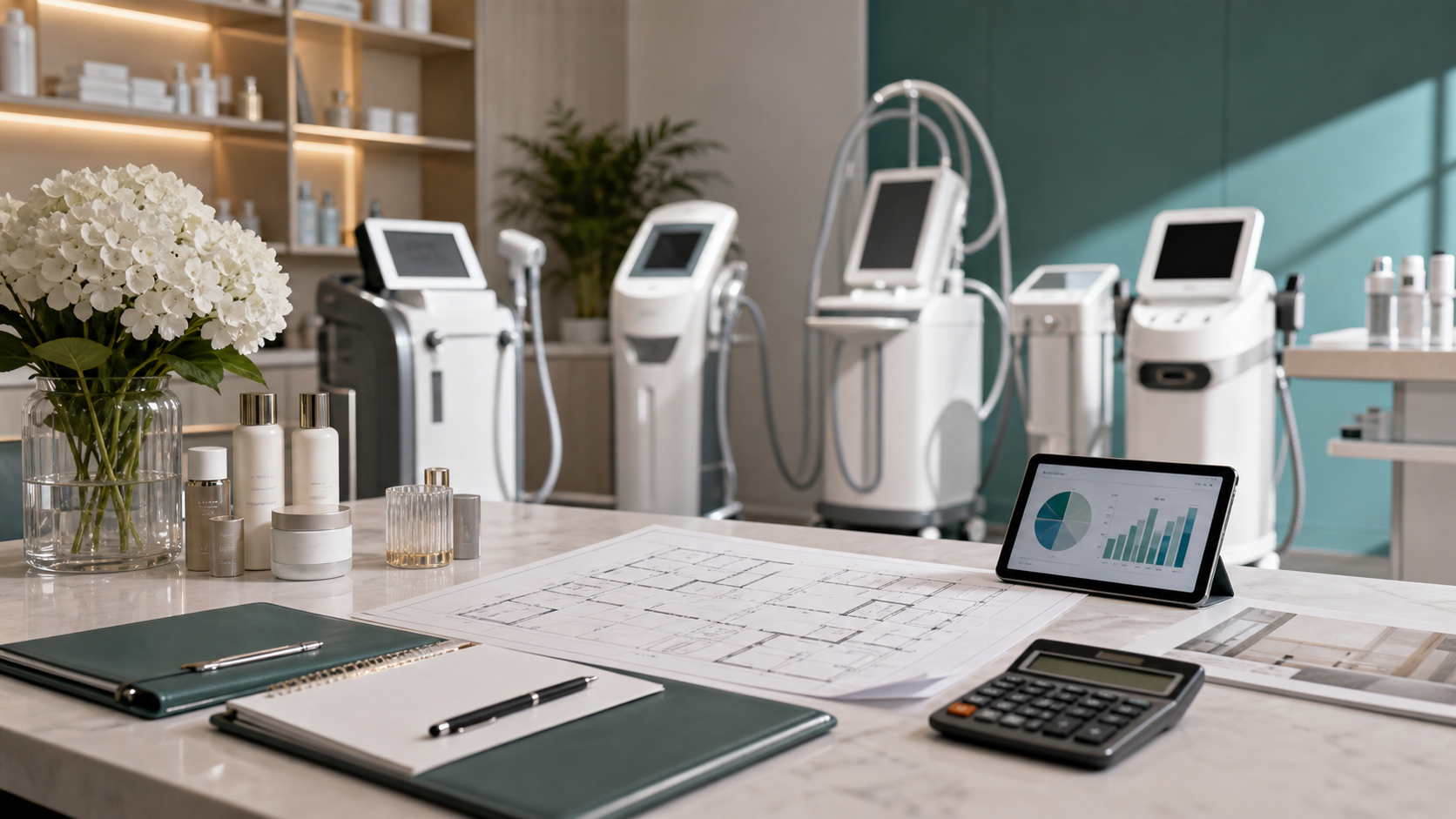
Before opening a beauty salon, divide the budget into four layers
Beauty salon start-up costs are affected by location, floor area, fit-out specification, brand positioning, rental deposit, staffing and the size of the first stock order. If you only ask "How much does it cost to open a beauty salon?", the answer is usually too crude. A more practical approach is to divide the total budget into four layers first:
| Budget layer | Main contents | Procurement objective |
|---|---|---|
| Basic operations | Beauty beds, sterilisation equipment, analysers, basic facial care equipment | Enable the salon to deliver day-to-day care consistently |
| Core treatments | Facial devices, body devices, HIFU, RF, skin-tightening equipment | Build core services that can be priced, packaged and paid back |
| Recovery and retail | Hydration, soothing, barrier repair, post-treatment care and home-use skincare | Improve treatment completion and client repurchase |
| Support systems | Training, after-sales servicing, marketing assets, booking systems, opening promotion | Ensure the equipment you buy can actually be sold |
If you are opening a beauty salon for the first time, the first batch of equipment should not chase "having everything"; it should first achieve three things: easy for therapists to learn, easy for clients to understand, and easy to sell as packages. Only if you are upgrading a salon that already has an established client base is it appropriate to put more of the budget into high-ticket anti-ageing, HIFU/MMFU, RF microneedling or body management equipment.
Reference budget allocation: do not stake all your capital on machines
Beauty equipment is an important asset for a salon, but it is not the only cost. If a new salon puts too high a proportion of its budget into large equipment, it may overlook fit-out circulation, training, consumables, marketing and cash flow. The following is a relatively conservative budget allocation framework; the actual proportions should be adjusted according to the salon type:
| Budget item | Reference proportion | Notes |
|---|---|---|
| Fit-out, furniture and treatment room configuration | 25% to 35% | Includes beauty beds, storage, lighting, reception area and basic hardware |
| Beauty devices and equipment | 30% to 40% | Core facial, body and anti-ageing equipment and analysers |
| Skincare, consumables and recovery products | 10% to 20% | First batch of salon-line (院線) products, single-use items, post-treatment care |
| Training, marketing and opening activities | 10% to 15% | Therapist training, trial treatment events, content assets and advertising |
| Cash flow reserve | 10% to 15% | To cover low seasons, repairs, restocking and the early period before the client base stabilises |
When the budget is limited, buying several high-priced devices at the same time in the first batch is not recommended. The safer approach is to set up a facial care system that can support day-to-day revenue first, then add one or two high-ticket core items according to your clientele, such as lifting, RF skin tightening, body management or recovery treatments.
Category one: facial beauty equipment list
Facial services are usually the easiest entry point for a new beauty salon to build a stable client base. Their advantages are that clients understand them readily, treatment frequency is higher, they can be paired with skincare retail, and membership schemes and package renewals are easier to run.
| Device or equipment | Suitable use | Start-up priority |
|---|---|---|
| Skin analyser | Helps analyse moisture, oil, pores, pigmentation and sensitivity | High |
| Deep cleansing or hydro-oxygen equipment | Basic cleansing, hydration, entry-level facial care | High |
| Infusion and hot-and-cold care equipment | Pairs with hydrating, soothing and repair products | High |
| LED or light therapy equipment | As soothing, skin quality management and post-treatment support | Medium |
| RF or skin-tightening equipment | Collagen management, fine line and contour care upgrades | Medium to high |
| Microcurrent or muscle stimulation equipment | Facial contour, a lifted feel and treatment differentiation | Medium |
A new salon's first batch of facial devices should be centred on "high utilisation". Even if the unit price is not high, as long as a device can be built into multiple packages, support different skin types and support recovery product sales, the actual return may be better than an expensive device with low utilisation.
If your salon is positioned as premium anti-ageing or light medical aesthetics, you may add RF or RF microneedling equipment as an upgrade item on top of the basic facial devices. But if your therapists lack experience, you should first confirm training, contraindications, hygiene procedures and consumable costs.
Category two: body and contouring equipment list
Body services suit salons with enough treatment rooms, longer treatment times and a clearly defined target clientele. The average spend per client on body equipment can be higher, but treatment time, staffing arrangements, consumables, management of client expectations and marketing assets all need to be clearer.
| Device or equipment | Common positioning | Questions to ask before buying |
|---|---|---|
| Body RF or skin-tightening equipment | Firming management for the abdomen, arms, thighs and similar areas | Whether the time per session and the physical demand on therapists are sustainable |
| EMS or muscle stimulation equipment | Body shape management, muscle definition and body treatment upgrades | Whether it suits your clientele and package pricing |
| Vacuum, lymphatic or massage equipment | Puffiness, circulation and soothing body care | Whether the description of results avoids being overly medicalised |
| Thermal or sauna capsule equipment | Relaxation, warming, and add-ons before and after body care | Room area, heat dissipation, cleaning and safety arrangements |
| Body measurement or circumference recording tools | Help clients understand treatment progress | Whether they can work with photographs, record sheets and follow-up procedures |
Body equipment should not be sold on wording such as "weight loss", "fat blasting" or "detox" alone. The safer approach is to position body services as body shape management, firming care, soothing maintenance or part of a treatment combination, and to state clearly that results vary with individual constitution, lifestyle habits and treatment arrangements.
If your beauty salon has a smaller floor area, pay particular attention to storage, noise, heat dissipation, treatment bed height and the therapist's working space for body equipment. Buying too many devices can instead make the room circulation chaotic and affect the client experience.
Category three: anti-ageing and high-ticket equipment configuration
Anti-ageing is one of the most commercially valuable directions for a beauty salon, but it is also the area where over-purchasing happens most easily. HIFU, MMFU, RF microneedling, skin tightening, laser and other energy-based devices each carry different operating requirements and compliance risks. A new salon should first ask itself: are clients willing to pay a higher ticket? Do the therapists have sufficient training? Is after-sales servicing reliable? Is the range of post-treatment recovery products complete?
| Equipment direction | Suitable salon type | Configuration suggestions |
|---|---|---|
| HIFU/MMFU lifting | Salons with a contour management and anti-ageing clientele | You may look at lifting options such as New Doublo 2.0, focusing on probes, training and after-sales support |
| RF or RF microneedling | Salons with skin quality, pore, fine line and collagen management needs | You may compare options such as Virtue RF, focusing on consumables, hygiene procedures and recovery add-ons |
| Skin-tightening and thermal equipment | Salons wanting to build facial or body firming treatments | You may compare skin-tightening options such as Titan according to your clientele |
| Laser or optical equipment | Salons with professional operating capability and compliance management | Intended use, operator qualifications, servicing and advertising restrictions should be confirmed first |
The greatest risk with anti-ageing equipment is "bought but not selling". If there is no clear treatment tiering in the salon, clients will simply view the different devices as similar lifting services. A better approach is to divide treatments into three tiers: entry-level maintenance, advanced skin quality management, and high-ticket contour or anti-ageing programmes. Each tier has a clear price, treatment time, suitable clientele and post-treatment care.
If you are comparing HIFU, MMFU and lifting equipment, you may first read the guide to HIFU equipment distribution and wholesale; if you are more concerned with RF, gold microneedling and probe consumables, you may refer to the RF machine distributor guide.
Category four: recovery products and medical skincare configuration
When opening a beauty salon, skincare and recovery products should not be mere counter display; they should be designed together with the equipment treatments. Particularly for HIFU, RF, RF microneedling, optical treatments or other more advanced equipment, post-treatment hydration, soothing, barrier care and education on home-use products directly affect client satisfaction and repurchase.
| Product category | Role in the salon | Procurement focus |
|---|---|---|
| Basic cleansing and hydration | Day-to-day facial care and entry-level treatments | Stable, low-irritation, easy to match to different skin types |
| Soothing and barrier repair | Post-treatment care, support for sensitive skin | Ingredients and marketing wording must be prudent |
| Premium salon-line serums | Pairs with infusion, anti-ageing and recovery treatments | Gross margin, treatment narrative and home-use extension |
| PDRN or repair-concept products | As post-treatment care and a premium retail direction | Avoid describing topical products as injections or medical treatments |
| Sun protection and home care | Extend post-treatment care results and repurchase | Must be easy to educate clients to use daily |
Repair-concept products such as EXXO PDRN can serve as a care add-on and a home retail direction, but in their copy salons must clearly distinguish topical skincare, in-salon care and medical procedures. Where wording relating to cells, exosomes, stem cells, PDRN or advanced therapies is involved, unverified medical claims should all the more be avoided.
Information from the Hong Kong Drug Office on advanced therapy products indicates that products involving human medicines based on genes, cells or tissues may be regulated under requirements relating to pharmaceutical products. When purchasing recovery products, beauty salons should ask suppliers to provide clear information, and should avoid advertising ordinary topical skincare as being for injection, transplantation or the treatment of disease.
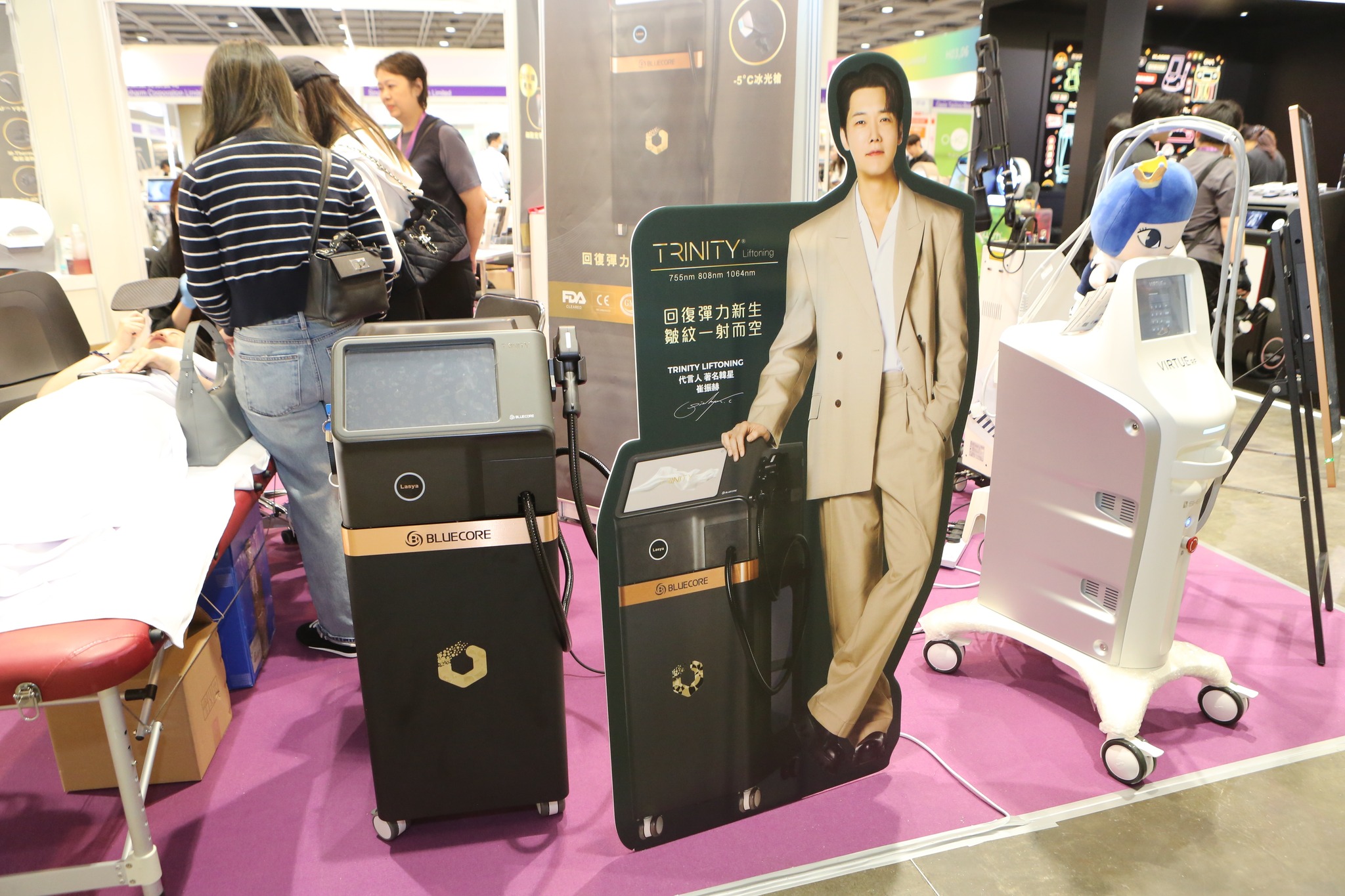
Three beauty salon start-up configuration options
Different salon types need different equipment combinations. The following are not fixed packages, but configuration thinking you may refer to when purchasing.
| Salon type | Equipment configuration | Suitable strategy |
|---|---|---|
| First-time small beauty salon | Skin analysis, deep cleansing, infusion, hot-and-cold care, LED, basic recovery products | Build stable facial care and membership packages first |
| Advanced facial anti-ageing salon | Basic facial equipment, RF skin tightening, HIFU/MMFU, recovery skincare range | Raise the average spend per client through lifting and skin quality management |
| Comprehensive beauty and body management salon | Facial equipment, body RF/EMS, skin-tightening equipment, body care products | Build combined facial, body and anti-ageing treatments |
If you have only one or two treatment rooms, give priority to equipment with high utilisation, a reasonable room occupancy time and easy handover between therapists. Only if your salon has three or more treatment rooms is it more suitable to configure facial, body and high-ticket anti-ageing services separately.
Questions to ask suppliers before purchasing beauty equipment
Whether a beauty equipment supplier is reliable is not judged on price and appearance alone. For a beauty salon, a distributor's real value lies in supply, training, after-sales service, repairs, consumables and treatment design.
| Procurement question | Why it matters |
|---|---|
| Is there manufacturer authorisation or a verifiable source? | Confirms the source of supply, warranty and parts support |
| Are local machine trials and training provided? | Therapists need first-hand understanding of the operation and the procedure |
| How are consumables, probes and accessories priced? | Directly affects the gross margin of each treatment |
| How long is the warranty period and the repair turnaround? | Downtime directly affects revenue |
| Is a contraindication list and operating guidance provided? | Reduces the risk of incorrect operation and client complaints |
| Are the marketing materials compliant? | Avoids overly medicalised wording or wording that guarantees results |
| Can they help design treatment packages? | Once bought, the equipment needs to be sellable and renewable |
Asia Pacific Beauty Group was established in 1998 and has long provided Hong Kong beauty salons, beauty industry entrepreneurs and professional purchasing buyers with beauty equipment distribution and wholesale, salon-line skincare, training and after-sales support. If you are planning start-up equipment for a beauty salon, you may first set out your floor area, budget, target clientele and the treatments you want to lead with, then contact the team to arrange a machine trial and procurement advice.
Compliance, hygiene and advertising risks must be addressed first
When opening a beauty salon, the configuration of equipment and products should not be determined by market hype alone. Services involving energy output, skin penetration, injection, medicines or medical procedures require stricter compliance, training and risk communication.
The Department of Health in Hong Kong has provided information to help the trade and the public distinguish medical procedures from beauty services; the Medical Device Division in Hong Kong also operates a Medical Device Administrative Control System, covering the listing of medical devices and post-market surveillance. When purchasing equipment, beauty salons should ask suppliers to state clearly the product's intended use, operating restrictions, servicing responsibilities and related documentation.
In their marketing, beauty salons should avoid the following wording or concepts:
- Guaranteed results
- Permanent lifting
- Zero risk
- Completely free of side effects
- Treating disease
- "Doctor-grade" without clear operator qualifications
- Injection or medical use without a compliance explanation
The safer approach is to describe things in terms such as "appearance improvement", "skin quality management", "contour care", "soothing repair" and "treatment packages", and to state that results vary with individual skin condition, lifestyle habits, treatment design and operating technique.
90-day start-up procurement timetable
Equipment procurement for a beauty salon opening should not be left to the last week. Equipment needs machine trials, quotations, training, treatment design, marketing photography and time for therapists to become familiar with it. The following is a fairly practical 90-day rhythm:
| Timing | Key tasks |
|---|---|
| 90 to 60 days before opening | Decide the salon type, clientele, number of treatment rooms, core treatments and budget ceiling |
| 60 to 45 days before opening | Machine trials, comparing suppliers, confirming equipment dimensions, power supply and after-sales terms |
| 45 to 30 days before opening | Finalise the first batch of equipment, skincare and consumables, and schedule training time |
| 30 to 14 days before opening | Complete treatment procedures, price lists, package design, contraindication lists and client Q&A |
| 14 days before opening to opening day | Internal trial treatments by therapists, shooting marketing assets, setting opening offers and the booking process |
If a supplier can only provide the equipment but cannot support training, procedures and after-sales service, you will still have to bear a great deal of operational risk yourself after opening. When choosing a beauty equipment distributor, treat it as a long-term partnership rather than a one-off transaction.
Frequently asked questions
Which equipment should be bought in the first batch when opening a beauty salon?
For a new salon it is recommended to buy high-utilisation facial equipment first, such as skin analysis, deep cleansing, infusion, hot-and-cold care and basic soothing equipment, then add one core high-ticket item according to positioning, such as RF skin tightening, HIFU/MMFU or body management equipment. Do not buy too much low-utilisation equipment at the outset.
With a limited budget, should facial or body equipment be bought first?
In general a new salon can start with facial equipment, because clients understand facial care readily, treatment frequency is higher, and it is easier to pair with skincare retail. Only if your salon already has a body management clientele, larger treatment rooms and clear packages is it appropriate to make body equipment a first-batch priority.
Are HIFU and RF microneedling suitable for a new beauty salon?
They can be considered, but should not be purchased simply because they are popular in the market. HIFU, MMFU and RF microneedling involve a higher ticket, operator training, consumable costs, management of client expectations and post-treatment recovery. If a new salon does not yet have a stable client base, it should first confirm whether the supplier can provide machine trials, training, contraindication guidance, consumable calculations and after-sales servicing.
Must recovery products be ordered together with the equipment?
It is recommended to stock at least basic hydration, soothing, barrier repair and sun protection products, because care education after an equipment treatment affects client satisfaction. If the salon leads with anti-ageing, HIFU, RF or RF microneedling, recovery products and home care should all the more be built into the package design.
How should a beauty equipment supplier be chosen?
Look at the manufacturer source, authorisation documentation, local machine trials, training, warranty, repairs, consumable resupply, marketing assets and treatment design capability. A supplier that only quotes a low price but cannot answer after-sales and training questions clearly may make operating costs higher in the long run.
What should be avoided in beauty salon equipment marketing?
Avoid absolute or medicalised wording such as "permanent", "guaranteed", "zero risk", "treats disease" and "completely free of side effects". Where skin penetration, injection, medicines or medical procedures are involved, matters should be handled in accordance with local regulatory requirements and professional advice.
Conclusion: a beauty salon start-up equipment list should be worked backwards from the operating model
Opening a beauty salon is not about buying the largest number of devices, but about building a treatment system that can consistently acquire clients, retain them, raise the average spend per client and control risk. Facial equipment carries the day-to-day revenue, body equipment carries differentiation and package extension, anti-ageing equipment such as HIFU/RF carries the high-ticket upgrade, and recovery products carry treatment completion and repurchase.
If you are planning a beauty salon start-up equipment list or budget allocation, or want to compare beauty equipment suppliers, you may first set out your floor area, number of treatment rooms, target clientele, affordable budget and the treatment direction you want to lead with, then contact the Asia Pacific Beauty team to arrange a machine trial and procurement consultation.
References
- Department of Health, Hong Kong: Distinguishing medical procedures from beauty services
- Medical Device Division, Department of Health, Hong Kong: Medical Device Administrative Control System
- Medical Device Division, Department of Health, Hong Kong: MDACS guidance notes
- Drug Office, Hong Kong: Advanced therapy products and related information
- Consumer Council, Hong Kong: Recommendations on the regulation of medical beauty services