
Eve Titan for Beauty Salons: Pre-Purchase Evaluation, Skin Tightening Treatments, Costs & Training Guide
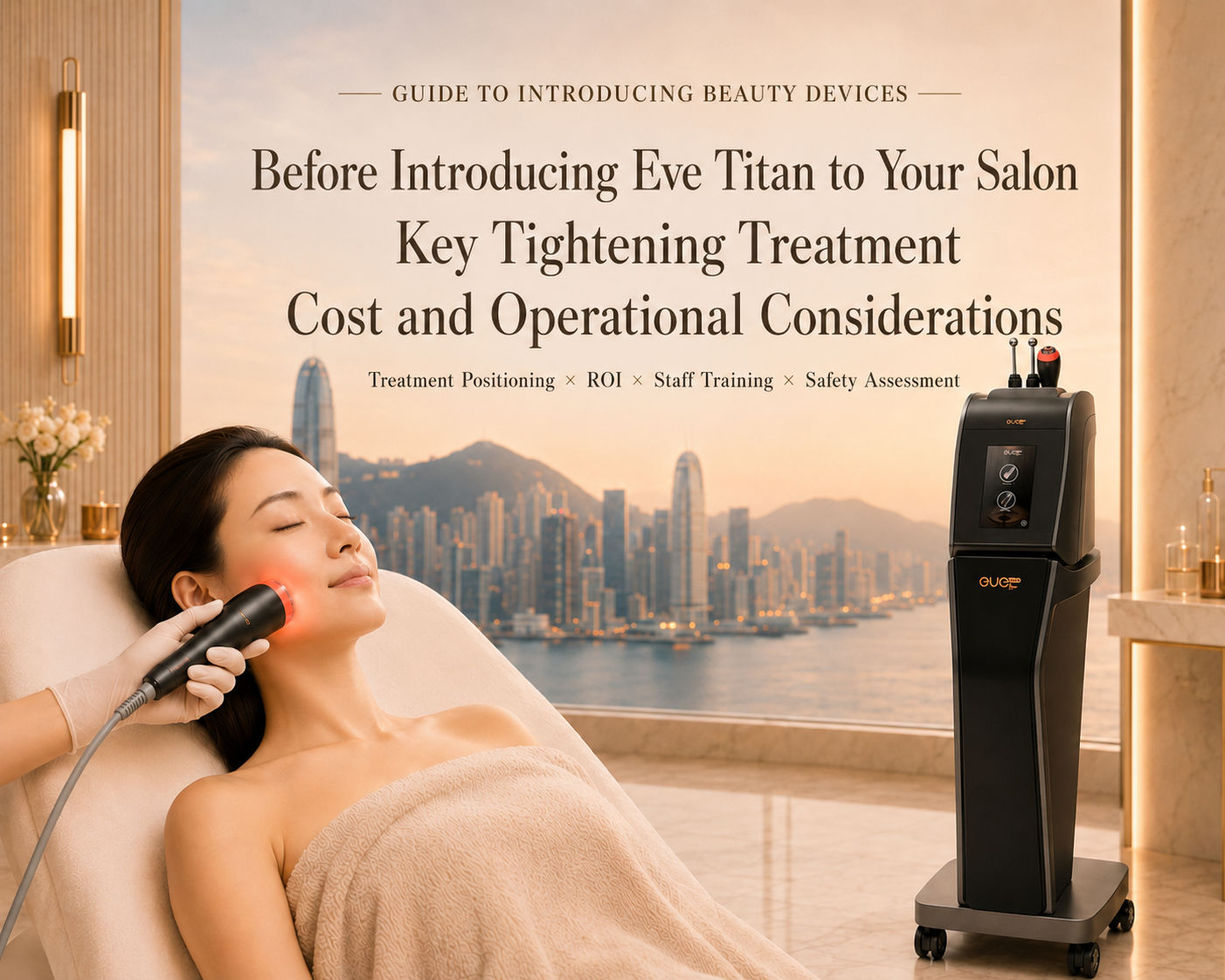
Before Introducing Eve Titan to Your Beauty Salon: Evaluating Skin Tightening Treatments, Costs, and Operational Essentials
Many beauty salons have a stable client base for hydration, cleansing, and facial care. However, when clients begin to focus on their jawline, facial contours, and skin firmness, traditional facials may no longer meet their new needs.
At this point, the salon faces more than just the question, "Should we purchase a new device?" The real considerations are:
What kind of skin-tightening treatments can be designed around the Eve Titan?
How does it differ from standard RF or EMS devices?
How should treatments be priced, and how do you estimate the payback period?
What training do aestheticians need?
Which clients might not be suitable for the treatment?
Can the supplier provide demonstrations, maintenance, and ongoing support?
This article will help beauty salons evaluate whether the Eve Titan skin-tightening device is suitable for their existing clientele and business model, covering treatment positioning, operational costs, procedures, and safety assessments.
How is the Eve Titan Different from Standard RF/EMS Devices?
Some aesthetic devices on the market focus on a single energy type or a single treatment area. The Eve Titan is positioned to integrate RF Radiofrequency skin tightening, EMS contouring, and Microcurrent care into a single treatment platform, using different shaped applicators. This allows salons to design treatments based on specific areas and goals.
For a salon, the real difference isn't just "having more energy types," but the ability to use one device to establish a clear, easily repeatable treatment protocol.
Eve Titan Feature | Practical Value for the Salon |
|---|---|
RF Radiofrequency Mode | Can be incorporated into treatment protocols focusing on skin tightening and elasticity improvement. |
EMS Mode | Useful for designing treatments focused on facial contouring and muscle stimulation. |
Microcurrent Mode | Suitable as part of daily facial contour management and maintenance treatments. |
Micro-Sphere Applicator | Smaller contact surface, ideal for delicate areas like the facial contours and jawline. |
T-Shaped Applicator | Suitable for larger areas like the cheeks, forehead, jawline, and neck. |
Comb-Shaped Applicator | According to manufacturer settings, can be extended to scalp beauty and daily scalp management projects. |
Multi-Area Treatment Design | Enables the creation of various offerings: single experience sessions, facial upgrades, contouring packages, and membership maintenance plans. |
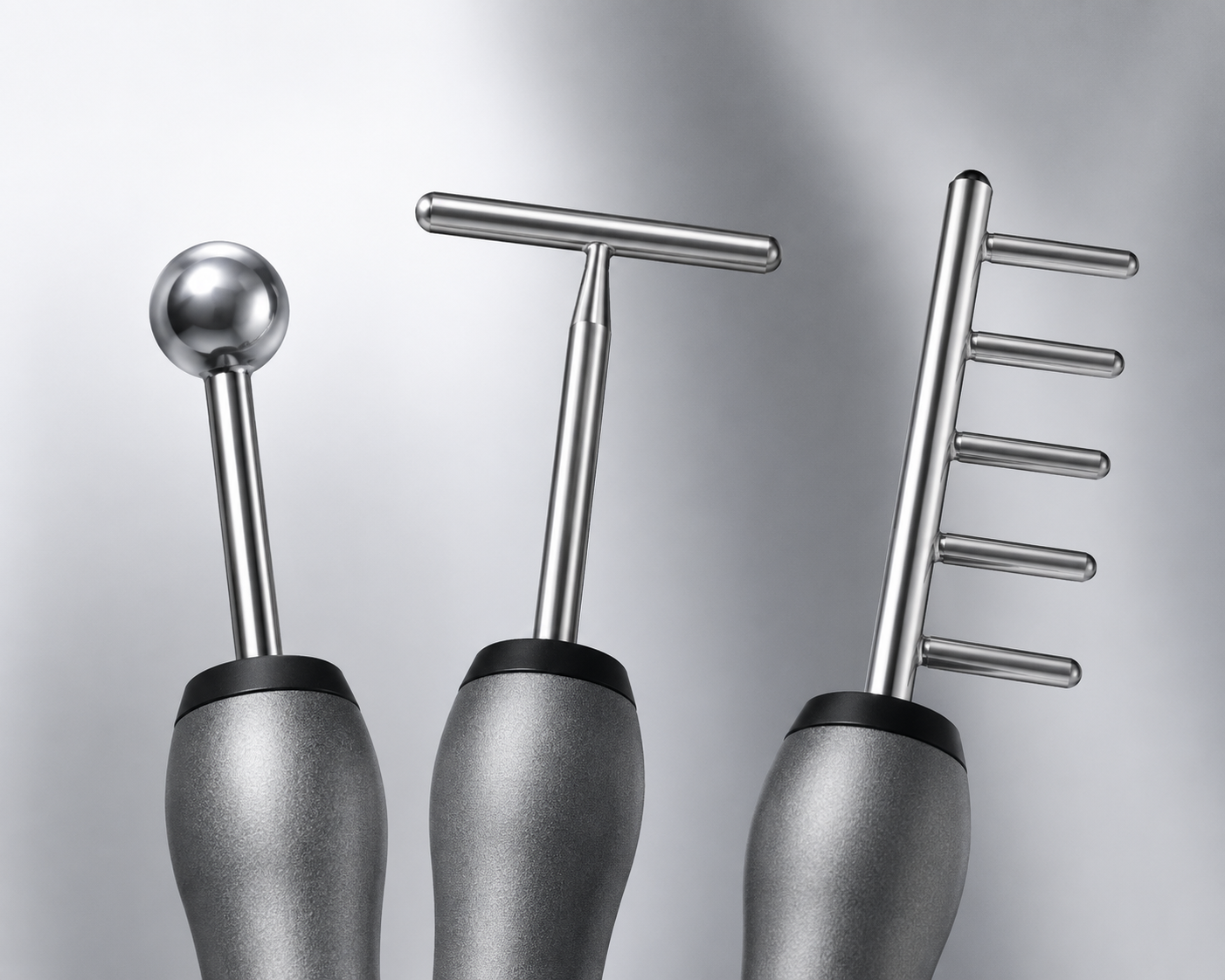
Please note: The actual operation, intensity, and suitable areas for different energy modes require formal training and adherence to product guidelines. Treatment effects and client experiences may vary based on individual conditions, parameters, and care routines.
Which Beauty Salons is the Eve Titan Suitable For?
The Eve Titan may not be suitable for every business model. Salons with the following characteristics are more likely to leverage its treatment value effectively:
Already have a stable facial clientele: If your salon has regular clients for hydration, cleansing, or anti-aging facials, the Eve Titan can be positioned as an upgrade to your existing facial services, without needing to build a completely new customer base.
Clients prioritize facial contouring and firmness: If clients frequently inquire about a blurry jawline, facial sagging, or loss of skin elasticity, the RF and EMS capabilities offer a clearer treatment focus than simple hydration.
Aim to develop phased treatments or membership plans: The Eve Titan is well-suited for a structured contouring management program involving assessments, records, and follow-ups, rather than relying solely on low-priced single sessions to attract clients.
The team is willing to establish standard operating procedures: The device's ability to generate consistent business value depends heavily on aestheticians following a standardized protocol for operations, parameter recording, client assessments, and post-treatment follow-up.
Conversely, if a salon lacks the time for training, does not have a health questionnaire in place, or primarily relies on exaggerated claims for quick package sales, it should first refine its internal processes before considering this device.
How Can You Design Eve Titan Skin Tightening Treatments?
Salons can design different tiers of treatment packages based on their existing clientele.
Treatment Positioning | Suitable Application |
|---|---|
First-Time Contouring Experience | Allows new clients to understand the procedure, sensations, and care approach. |
Facial Upgrade Add-on | Integrates into existing hydrating, firming, or anti-aging facials. |
Facial Contouring Management | Focuses on areas like the cheeks, jawline, and neck. |
Phased Treatment Package | Includes regular progress photos, parameter adjustments, and client feedback records. |
Membership Maintenance Plan | Scheduled follow-up sessions after completing the initial phase of contouring management. |
Facial & Scalp Combination | Designed as a cross-area beauty treatment based on device settings and training protocols. |
Treatment names and promotional content should focus on "care objectives" and "professional protocols," avoiding absolute claims like permanent lifting, guaranteed results, or disease treatment.
Pre-Introduction Operational Assessment Checklist
Salons can use this table to quickly assess their readiness for introducing the device.
Assessment Item | Points to Confirm Before Purchase |
|---|---|
Target Clientele | Do existing clients have a need for firming, contouring, or anti-aging care? |
Treatment Positioning | Will it be a one-time experience, a facial upgrade, a stand-alone service, or a membership treatment? |
Pricing Model | How will single-session prices, package discounts, and aesthetician commissions be set? |
Operation Time | How much aesthetician and room time does each session require? |
Consumable Costs | Are specific conductive gels, aftercare products, or replacement parts required? |
Training Arrangements | Does it include theory, practicals, client assessments, and contraindication protocols? |
Operational Documentation | Are operation manuals, treatment record forms, and informed consent forms provided? |
Maintenance & Repair | What are the warranty terms, parts availability, on-site repair, and loaner device policies? |
Certification Documents | Do the manufacturer details, model, and certification scope on the documents match the actual device? |
Demonstration Arrangements | Can the team participate in a full demonstration and trial use beforehand? |
Simple Payback Period Estimation
Salons should not just look at the device's purchase price but also calculate the actual contribution per treatment.
Monthly Treatment Revenue
= Average Realized Price per Session × Estimated Number of Sessions per MonthMonthly Treatment Contribution
= Monthly Treatment Revenue − Consumables − Staff Wages − Marketing & Related Operating CostsEstimated Payback Period
= Device & Start-up Costs ÷ Monthly Treatment Contribution
It is advisable to use conservative booking estimates when calculating, factoring in off-seasons, promotional trials, staff training periods, and cancellations.
Why are Training and After-Sales Support Equally Important?
Two devices with similar RF, EMS, or microcurrent features can offer vastly different user experiences. Beyond hardware, salons should compare the complete introduction package offered by the supplier.
Before purchasing, you should know:
Whether formal theoretical and practical training is provided.
Whether training covers the use of different applicators.
Whether the supplier assists in establishing treatment protocols and parameter records.
Whether retraining can be arranged for new aestheticians.
Whether product specifications and certification documents are provided.
Who provides technical support when device issues arise.
How post-warranty repair and part costs are calculated.
Whether a live demonstration for salon staff can be arranged.
For a salon, a fully-featured device lacking training and support might be harder to manage than a simpler device with excellent backup. Therefore, when evaluating the Eve Titan, you shouldn't compare only the price; consider the device, training, treatment design, and after-sales service as a single integrated solution.
How to Establish a Client Follow-Up Process?
Clients should return not because of pressured sales, but because they clearly understand the purpose and expected progress of each phase.
Step 1: Pre-Treatment Assessment
Understand the client's areas of concern, past aesthetic treatments, health status, and realistic expectations. Explain the scope of the treatment.
Step 2: Establish Baseline Records
Take photos under consistent lighting, angles, distance, and expressions. Also record the modes used, energy settings, and client feedback.
Step 3: Phased Review
Compare results after a series of sessions, avoiding over-interpretation based on a single session or using inconsistent photographic environments.
Step 4: Schedule Maintenance Sessions
Based on the client's response and actual needs, suggest an appropriate follow-up frequency. This makes follow-ups based on professional assessment, rather than a pre-committed promise of permanent or fixed results.
Who Might Not Be Suitable for Treatment?
RF, EMS, and microcurrent treatments are not suitable for everyone. Salons must complete a health questionnaire and professional assessment before any procedure.
The following individuals generally require a doctor's consultation or may not be suitable for these treatments:
Pregnant women or those suspected of being pregnant.
Individuals with pacemakers or other implanted electronic devices.
Individuals with metal implants in the treatment area.
Individuals with epilepsy, cardiovascular diseases, or severe neurological disorders.
Individuals with wounds, infections, inflammation, or severe skin conditions in the treatment area.
Individuals who have recently undergone injections, surgeries, laser treatments, or other medical aesthetic procedures.
Individuals who have previously experienced adverse reactions to electrical currents, heat, or conductive products.
This article does not constitute medical advice. Actual operations must adhere to official training, product manuals, and professional assessments.
Pre-Introduction Checklist for the Eve Titan
Before making a purchase decision, salons should confirm the following:
Reviewed complete product specifications and corresponding certification documents.
Participated in a live demonstration and understood the different operating modes.
Confirmed training arrangements for aestheticians and retraining for new hires.
Calculated consumable, labor, marketing, and maintenance costs.
Estimated the payback period using conservative booking numbers.
Designed at least one clear skin-tightening treatment protocol.
Prepared health questionnaires, informed consent forms, and treatment records.
Understood the warranty period, repair process, and loaner device availability.
Confirmed the supplier can provide ongoing technical and after-sales support.
If most of the above items are still unconfirmed, it's recommended to complete the demonstration, cost calculation, and team evaluation before deciding whether to proceed.
Is the Eve Titan Suitable for Your Beauty Salon?
The Eve Titan's advantage lies in integrating RF skin tightening, EMS contouring, microcurrent therapy, and different applicators into a single salon platform. This allows the design of multi-layered facial and contouring services.
However, the device itself won't automatically generate return clients or revenue. The factors that truly determine success are the salon's ability to establish:
A clear treatment positioning.
A reasonable pricing and cost model.
Consistent operational and recording processes.
Thorough client assessments.
Sufficient training, maintenance, and after-sales support.
Salons don't need a device marketed as the "hottest" trend. They need a system for skin-tightening treatments that the team can operate proficiently, clients can easily understand, and can sustain stable business operations over the long term.
Next Steps
View Eve Titan Product Specifications:
Learn about energy modes, applicator configurations, technical details, and relevant certification documents.Schedule a Demonstration / Inquire about Training & After-Sales:
Arrange a hands-on experience to understand operation training, treatment planning, maintenance, and repair options.