
Eve Titan Treatment Menu Design: What Else Can a Salon Sell Beyond Facials?
For many salons the revenue problem is not too few clients. It is that each client has too few things they can buy. When most of the service list sits in cleansing, hydration and massage, average spend hits a ceiling quickly, and renewals end up being driven by discounting.
There are broadly two ways past that ceiling: bring in more new clients, or give existing clients more legitimate reasons to buy again. The first is expensive. The second comes down to how the treatment menu is designed.
This article uses Eve Titan as the example to show which treatment lines a multi-applicator device can open, how to convert session time into room capacity, and what to avoid in promotion. If you are still deciding whether to buy, start with the pre-purchase evaluation guide instead; this article assumes the device is already in the room and focuses on menu design.
1. How many treatment lines can one device open?
Eve Titan combines radiofrequency, EMS and microcurrent, paired with differently shaped applicators. For menu design, what matters is not the number of energy types but that each applicator maps to something you can sell on its own.
| Applicator / mode | Main area of use | Menu item it supports |
|---|---|---|
| Micro-sphere applicator | Areas around the facial contour needing finer work | Facial contour management, single-session trial |
| T-shaped applicator | Cheeks, forehead, jawline, neck | Facial upgrade add-on, neck add-on |
| Comb applicator | Scalp, per manufacturer settings and training | Scalp care, viable as its own revenue line |
| Bio-current gloves / mask | Whole face | Comfort-led maintenance treatment, member sessions |
| Hands-free EMS pads | Targeted areas | Targeted care, can run while another step proceeds |
Actual operating method, intensity, suitable areas and contraindications should follow the official product documentation and supplier training.
2. Converting session time into menu capacity
The step most often skipped in menu design is converting treatment time into room capacity.
Assume a 15-minute application (the real figure should come from manufacturer training and your own treatment design). Adding consultation, cleansing, soothing and record-keeping, a complete session runs about 45 minutes. For one room, a nine-hour trading day and seventy percent room utilisation:
- Roughly 8 to 9 sessions can be scheduled per day
- If about a third are facial upgrade add-ons, the rest can run as standalone contour management
- The same device supports both an add-on and a headline item within the same day
The purpose of this arithmetic is not to forecast revenue. It is to check before and after purchase whether the menu is over-concentrated in a single item. If every treatment needs the same room for 90 minutes, no device will open a second line. For the full payback calculation see the beauty equipment payback guide.
3. Scalp care: the second revenue line most salons overlook
The comb applicator lets a salon add scalp care alongside facial work. The value of this line is that:
- The audience overlaps heavily with the facial audience, so no new client acquisition is needed
- It can follow a facial treatment, extending both the session and its value
- Male clients tend to accept it readily, which widens the client mix
Note that scalp care promotion is regulated in the same way. Position the treatment around cleansing, comfort and routine scalp management, and keep it clear of hair growth, hair loss treatment or scalp disease claims.
4. The half-face demonstration: lowering the cost of persuasion
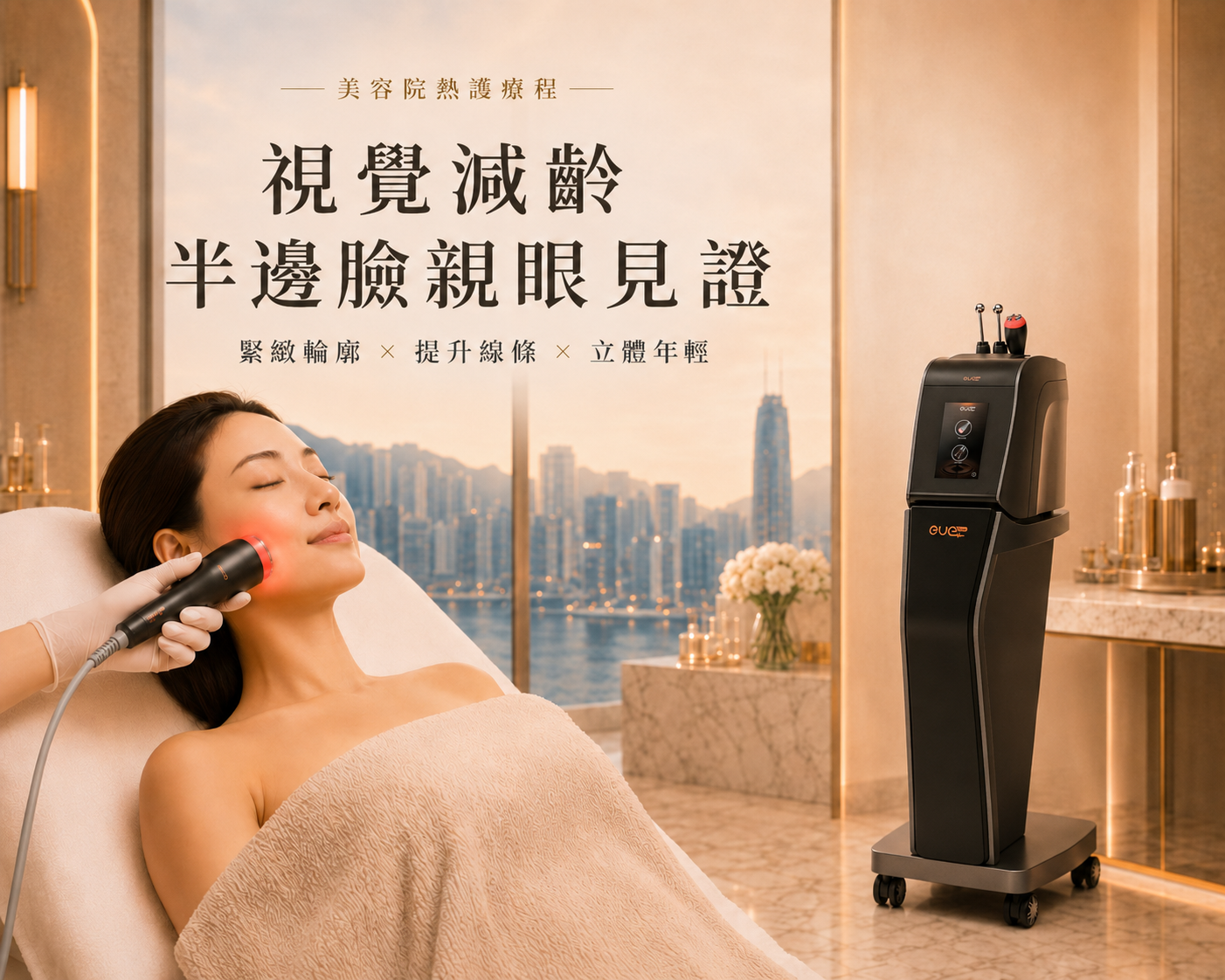
Completing one side of the face during consultation, and letting the client compare in the mirror themselves, is the most practical way to sell this class of device. It turns explanation into observation, and it puts expectation setting before the sale rather than after it.
Three things to watch when doing this:
- Say in advance that a left-right difference may be an immediate impression and can change over time
- Do not use before-and-after photographs in promotion unless you hold written consent and meet advertising rules
- Record the day's parameters and the client's response, so the next session has something to work from
5. Three menu tiers and their pricing
| Tier | Content | Purpose |
|---|---|---|
| Entry trial | Single area, shorter flow | Let new clients feel the treatment without competing on price |
| Headline item | Full facial contour management flow | Build something the salon is known for |
| Package | Face plus neck, or face plus scalp | Raise session value and visit frequency |
The three tiers need clear separation. If the entry trial is barely different from the headline item, the client has no reason to move up.
6. Wording to avoid in promotion
Where this kind of treatment most often goes wrong is describing beauty care as a medical outcome. Avoid the following:
- Guaranteed results, permanent lift, results after one session
- Treat, cure, or eliminate a disease or pain condition
- Detox, flush out toxins, clear metabolic waste
- Before-and-after photographs used without consent or outside the rules
The safer approach is to describe what the treatment does, what the client will feel, and that outcomes differ between individuals. For detailed wording guidance see the salon treatment marketing compliance guide.
Frequently Asked Questions
Should Eve Titan be a headline item or an add-on?
Both, and ideally at the same time. The add-on raises spend among existing facial clients; the headline item gives the salon something it is known for. Running only one of the two usually leaves the device under-used.
What can a client reasonably expect after one session?
Immediate sensation and visible change vary between individuals, and depend on skin condition, lifestyle and the area treated. Say so before the treatment, and avoid promising a fixed number of sessions or a fixed result. Explaining the process and the sensation builds more trust than guaranteeing an outcome.
Does scalp care need a separate licence or qualification?
Scalp beauty care and hair loss treatment are two different things. Keep the treatment within cleansing, comfort and routine management, and follow the product documentation and supplier training. Where a scalp condition or hair loss is involved, advise the client to consult a suitable healthcare professional first.
How much training do therapists need?
Training hours, content and any certification should be written into the purchase terms. Beyond technique, training should cover consultation flow, area selection, contraindication awareness, parameter records and compliant client communication.
How should the payback period be calculated?
Include the machine price, consumables, servicing, training and room time, then compare against the sessions you can realistically schedule — rather than dividing the machine price by a single treatment fee. The beauty equipment payback guide sets out the method.
Conclusion: you are not selling a device, you are selling a menu
The gap between salons rarely comes from whose device is newest. It comes from whose treatment menu is clearest — the client knows what they are buying, the therapist knows how to deliver it, and the salon knows how many sessions each room can hold per day.
The real value of a multi-applicator device is that it makes all three possible at once. To review Eve Titan's applicator configuration and operating flow, or to arrange a demonstration, see the Titan product page or contact us.
This article is general guidance on salon operations only. It is not medical diagnosis, treatment or health advice. Product functions, suitable areas, contraindications and operating requirements should follow the official product documentation, supplier training and the rules applicable in your region. Sensation and visible change vary between individuals.