
Trinity Liftoning Before and Aftercare Guide
Good aftercare begins before a Trinity appointment. The client needs an honest consultation, and the operator needs the current product manual, appropriate training, laser-safety controls and a clear escalation route. Contact cooling may support comfort, but it does not remove the need for screening or make adverse reactions impossible.
Instructions vary by device configuration, indication, treatment area and individual. Always follow the treating professional's written advice and the exact manufacturer labelling over a general online checklist.
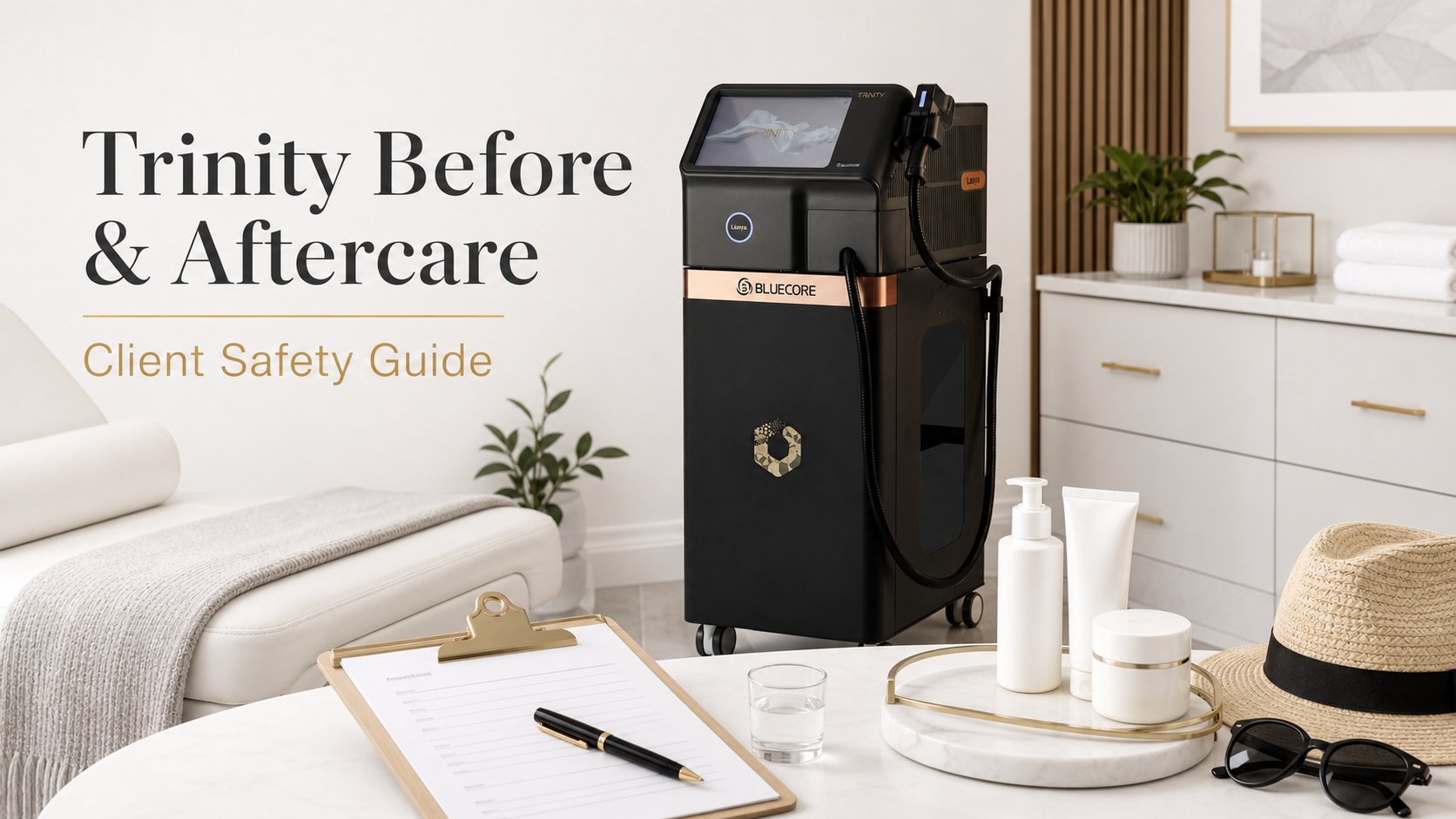
Before the Appointment

Tell the provider about your health and treatment history
Disclose relevant medical conditions, pregnancy or breastfeeding status, medicines, supplements, allergies, previous aesthetic procedures, abnormal scarring, cold sores, skin infections and any previous reaction to laser or heat-based treatment. The provider decides what is relevant under the manual and local professional rules.
Do not stop prescription medicine or start preventive medicine based on a blog. Discuss it with the prescribing or treating healthcare professional.
List current skincare
Tell the provider about retinoids, exfoliating acids, bleaching products, acne treatments, photosensitising products and recent peels. Some laser guidance recommends pausing selected products, but timing is procedure-specific. Obtain written instructions instead of choosing an arbitrary number of days.
Report sun exposure
Recent tanning, sunburn or heavy UV exposure can change treatment suitability and pigment risk. The American Academy of Dermatology advises avoiding tanning and using broad-spectrum, water-resistant SPF 30 or higher around laser procedures. Your provider may postpone treatment if the skin is tanned, burned or irritated.
Arrive with an unchanged treatment area
Follow the salon's preparation instructions for makeup, skincare, shaving or hair removal. Do not conceal irritation with makeup. Tell the operator if the skin has changed since consultation.
Agree on realistic expectations
Ask which concern is being assessed, which applicator and intended use apply, what change is realistic, when review occurs and what normal short-term response may look like. Reject guarantees of pain-free, risk-free, immediate or permanent results.
What the Salon Should Check Before Treatment
- Client identity and updated consent
- Changes in medicines, health, skincare or sun exposure
- Treatment area and current skin condition
- Exact device, applicator and software mode
- Cooling function and handpiece contact surface
- Correct wavelength-rated eyewear for client and operator
- Room warning, access control and reflective hazards
- Current protocol, settings authority and stop criteria
- Camera consent and consistent photography setup
- Aftercare sheet and escalation contact
The US K241951 public record identifies specific Lasya-Trinity applicators and indications. The salon should not use a product nickname as a substitute for checking the actual device and permitted treatment purpose.
During the Appointment
The operator should explain expected sensations and maintain communication. Report unexpected sharp pain, intense heat, visual symptoms, sudden skin change or any feeling that differs from what was explained. The operator should pause and assess rather than asking the client to tolerate a warning sign.
Cooling can reduce epidermal heat and discomfort when correctly designed and used, but it is one control among many. Correct contact, settings, movement, eye protection and client selection remain essential.
Aftercare Principles

Keep care gentle
Use only the cleanser, moisturiser and other products approved by the provider. Avoid scrubbing, picking, exfoliation and unapproved active products while the skin is reactive. Do not copy aftercare for an ablative laser if the Trinity protocol was different.
Protect from sun
Use the sun-protection plan provided by the professional. General dermatology guidance supports shade, protective clothing and broad-spectrum sunscreen. The exact start time and product should account for skin condition and the treating provider's instructions.
Avoid unnecessary heat and friction
The provider may advise temporary avoidance of hot baths, sauna, steam, vigorous exercise, swimming or friction. The duration depends on the treatment and response; follow the written plan rather than a universal timetable.
Do not self-treat a reaction
Avoid applying ice directly, potent steroids, antibiotics, acids, retinoids or home remedies unless instructed by an appropriate professional. Photograph the area in neutral light and contact the provider if concerned.
Attend the review
A review is part of safe care, especially before repeating or combining energy-based procedures. Provide an accurate account of recovery, products used and any unexpected sensation.
What May Be Expected and What Needs Review
The exact expected response must come from the provider and manual. In laser practice, short-lived warmth, redness, mild swelling or sensitivity may occur with some procedures. The absence of downtime is not guaranteed.
Contact the treating provider promptly for:
- worsening or severe pain
- marked or spreading swelling
- blistering, weeping, crusting or an open area
- a burn-like appearance
- persistent redness beyond the advised period
- new darkening or lightening that causes concern
- signs of infection
- eye pain, visual change or light sensitivity
- facial weakness, numbness or another neurological symptom
- any symptom that is rapidly worsening or was not discussed
Seek urgent medical care when symptoms are severe, involve the eyes, breathing or consciousness, or the provider cannot be reached and delay could be harmful.
Aftercare Card for Salons
Provide each client with a dated record containing:
- treatment area and device name
- normal short-term responses discussed
- approved cleansing, moisturising and sun-care steps
- products and activities to avoid
- when routine skincare may resume
- provider contact details and hours
- warning signs and urgent-care instructions
- review date
Avoid generic wording such as "no downtime" or "nothing to worry about." It can delay reporting.
Records the Salon Should Keep
Document consultation updates, consent, device and applicator identification, settings, mode, cooling check, area, operator, products, immediate response, photographs, aftercare and follow-up. Record an adverse event factually, including timing and actions taken; do not edit the original record after a complaint.
Client photographs and health information are personal data. Use approved storage, access controls, retention rules and consent rather than personal messaging accounts or private camera rolls.
Repeating or Combining Treatment
Do not book the next energy-based procedure merely because the skin looks calm on the day. Review recovery, the original endpoint, any delayed reaction and the rationale for another treatment. Combination timing should follow device-specific guidance and appropriate professional judgment.
For product-specific context, review the Trinity product page and the separate combination treatment planning guide. Salons can use the contact page to ask about the current training and after-sales scope.
Frequently Asked Questions
Is Trinity completely painless?
No absolute promise is appropriate. Contact cooling is intended to support comfort, while sensation varies by client, area, settings and technique.
Can I wear makeup immediately afterwards?
Follow the treating provider's instructions. Suitability depends on the skin response, products and protocol.
How long should I avoid active skincare?
There is no universal period. Ask for a written plan covering each product, especially retinoids, acids and prescription treatments.
Is redness normal?
Some laser procedures can cause temporary redness, but the expected degree and duration must be explained for your treatment. Worsening, prolonged or painful redness needs review.
Can I have RF, HIFU or another laser soon after Trinity?
Only after a qualified review and a device-specific plan. Do not stack treatments by default.
This article is general safety information, not medical advice. Contact a qualified healthcare professional for symptoms, contraindications or individual treatment decisions.