
Fair Before-and-After Beauty Photos: Setup, Originals and Consent
Before-and-after photographs should be comparable before discussing change. Lighting, chin position, distance and beautification can alter texture and contour without a treatment effect. Salons need repeatable photography and separate handling of internal records and public promotion.
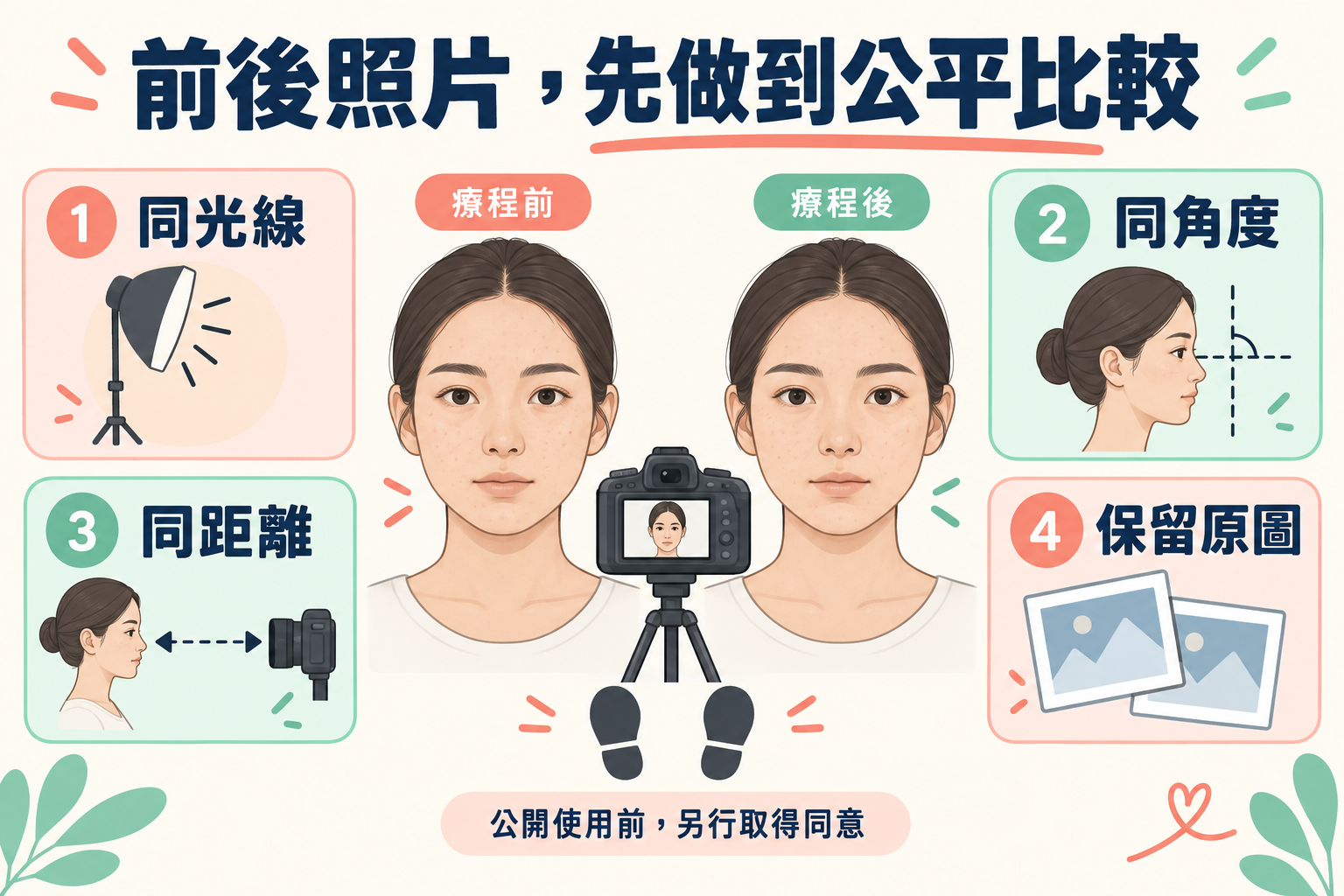
This AI-generated graphic uses Traditional Chinese labels. Its portraits are illustrations, not real clients or evidence of improvement.
Define the question a photograph should answer
Contour, pigmentation, redness and texture require different views and timing. Record the purpose first. Immediate appearance and later follow-up answer different questions and should not be mixed without explanation.
Photos supplement consultation but do not establish causation alone. Other products, procedures, habits and natural variation can influence appearance. A genuine case does not predict everyone's response.
Create a repeatable setup
These are operational suggestions, not universal clinical specifications. Medical facilities should follow applicable professional policies.
| Variable | Keep consistent | Typical error |
|---|---|---|
| Lighting | Source, position, brightness, colour temperature | Window light versus a studio lamp |
| Camera | Device, lens, focal length, mode | Close wide-angle perspective changes |
| Distance | Mark subject and camera positions | Different scale or perspective |
| Angle | Defined front and relevant side views | Changed head turn or chin height |
| Expression | Relaxed expression and gaze | Smiling changes contour |
| Skin preparation | Consistent makeup, cleansing, reflective products | Foundation conceals pigment |
| Background | Neutral colour and framing | Background affects exposure |
Test repeatability with staff leaving and returning to the setup on the same day. If apparent changes are already substantial, correct the setup. Record its version and recheck after a camera or lighting change.
Match timing to the purpose
Separate baseline, immediate, short-term and later follow-up records. The responsible person should set timing for the actual procedure and client. Hydration, redness and swelling may temporarily change appearance.
Record dates, time since treatment, sessions, concurrent products, reactions and setup changes. Display differing intervals explicitly instead of using an unexplained “After” label.
Preserve originals and record edits
Keep original files without overwriting them. Save cropped, anonymised or date-labelled display copies separately and record changes. Do not smooth skin, reshape contours, darken marks or use AI filling to create a difference.
Exposure adjustments do not retroactively create identical conditions. Re-photograph where appropriate or explain the limitation. Case-code/date/view filenames are preferable to names or phone numbers in shared files.
Internal recording is different from Instagram use
Hong Kong's Privacy Commissioner explains that identifiable photographs can be personal data and new-purpose use raises data-protection requirements. Official explanation
Separate service records, staff training, website cases and social promotion so the client understands and chooses the relevant uses. Actual legal requirements depend on collection purpose and circumstances. Explain public reposting and screenshot risks; do not promise all copies can be recovered.
Record channels, body areas, identification, scope and a contact for withdrawal handling. A refusal of promotional use should not be confused with required service records. “You may take a picture” does not establish every advertising permission.
Control access and retention
Give access by role and use approved storage, backup, access records and deletion procedures. Avoid unrestricted downloads, private cloud storage or group forwarding. Retention needs a defined purpose and policy rather than indefinite storage without justification.
For withdrawal or deletion requests, verify identity and scope, identify copies and arrange appropriate handling. Retaining a necessary service record and stopping promotional use may involve different decisions.
Six checks before publication
- Can the original and corresponding record be retrieved?
- Are lighting, angle, distance and preparation comparable?
- Are dates, sessions and concurrent factors described?
- Does valid public-use permission cover this use?
- Does wording avoid guarantees and misleading omissions?
- Has the responsible reviewer recorded approval and version?
Frequently asked questions
Is the same phone sufficient?
No. Lens, lighting, distance, exposure and beautification can still differ.
Does covering the eyes eliminate consent issues?
Do not assume so. Other details can identify a person; assess actual data and purpose.
Can AI-generated comparisons be treatment evidence?
No. Label explanatory illustrations and do not fabricate improvement.
Do immediate photos establish long-term results?
No. Timing and other influences remain important.
Can permission be reused for another purpose?
Check its scope and applicable requirements before a new channel or purpose.
Related reading
Connect photos to consultation and reassessment, marketing compliance and incident records. Photographs cannot replace timely assessment.