
Design the Service Before Buying: Consultation, Records and Reassessment
Before buying a beauty unit, map a client's journey from consultation to reassessment. Functions alone do not define who assesses, when to postpone, how to explain limits or how to record and follow up reactions. Service design helps evaluate staffing, room time and training before investment.
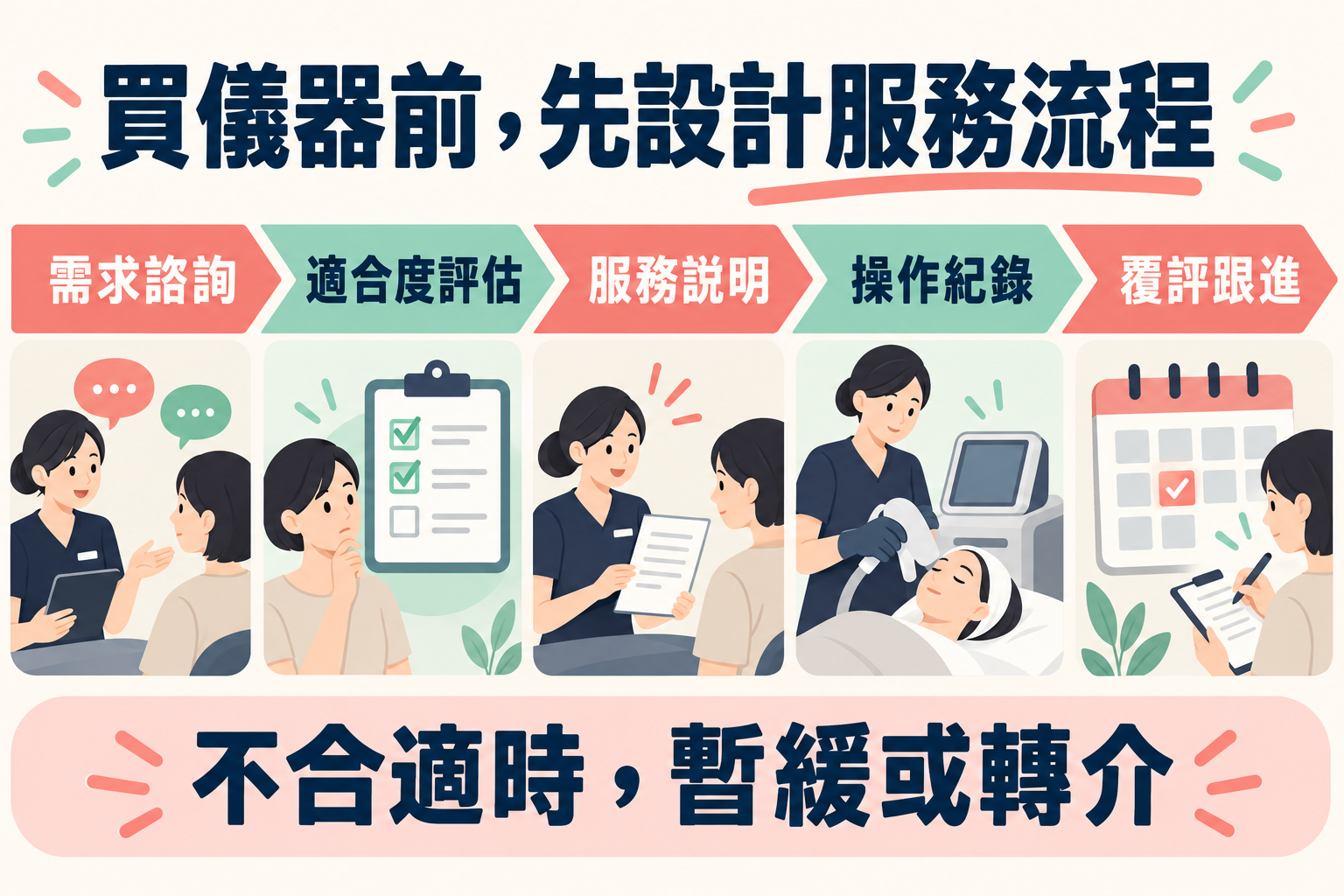
This AI-generated diagram uses Traditional Chinese labels. It is not a diagnostic or operating tool.
Step one: define a discussable goal
“Look better” is difficult to reassess. Discuss the area, appearance concern, acceptable recovery, budget and time without turning a client's description into a diagnosis. Explain unrealistic expectations instead of selling additional services to fulfil a promise.
Define the new service's purpose and suitable case range before choosing equipment. Do not build an everyone-suitable package from its entire feature list and only later look for clients.
Step two: assess purpose and qualifications
Relevant records may include recent procedures, skin condition, medication, allergies and previous reactions. Appropriate people should design questions around the IFU. A completed form is not professional assessment, and staff should not independently diagnose disease or stop medication.
Hong Kong's Department of Health advises understanding procedures, risks and providers. Keep postponement and referral routes in the process rather than make every answer lead to treatment. Official cosmetic-procedure information
Put five stages and responsibilities together
| Stage | Complete | Handover information |
|---|---|---|
| Needs | Area, goal, expectations, timing, previous care | Consultant, date, unanswered questions |
| Suitability | Relevant restrictions, contraindications, referral needs | Qualified assessor and decision |
| Explanation | Options, possible effects, risks, costs, follow-up | Version, understanding, relevant consent |
| Operation | Actual unit, staff, settings, supplies, reactions | Records under instructions and policy |
| Reassessment | Reactions, goal changes, images, next step | Owner, timing and decision |
Reception can gather information and arrange appointments; assessment and operation decisions follow roles and qualifications. Identify who approves and who resolves uncertainty. Beauty competency standards and device documents can support requirements.
Step three: explanation is more than a signature
Explain the observation goal, variation, possible reactions, recovery, alternatives, doing nothing, costs and contacts. Avoid no-risk, guaranteed-result or universal session-count wording.
Check understanding and address questions before applicable consent. Retain the explanation version. Permission for publicity photographs needs separate handling; a treatment form does not automatically authorise website or Instagram publication.
Step four: make operation records traceable
Record case code, model, serial, accessories, timing, operator, actual settings, consumable batch and reactions. Settings follow instructions, training and appropriate assessment; this guide gives no universal energy or session settings.
Record stopping, plan changes and reasons instead of just completed. Prioritise safety and help for unusual reactions before documentation. Connect equipment status to the handover process.
Step five: reassess reactions and the original goal
Timing depends on the actual procedure and person, not one interval for every unit. Ask about health and skin reactions before assessing the initial goal. Keep subjective experience separate from comparable observations. Follow photography standards.
An unsatisfactory result should not automatically trigger higher settings or more sessions. Review suitability, records, concurrent factors and expectations with the appropriate person. Include less favourable cases when assessing the service.
Simulate the full journey before launch
Use a non-body mock case to test reception, assessment, explanation, records, follow-up booking and escalation. Measure consultation, cleaning, photography and documentation time as well as operation minutes.
Actual pilot services still require suitable qualifications, documents, premises, training and safety arrangements. Trial status does not justify skipping assessment. List incomplete conditions for responsible confirmation before launch.
Keep a pause and referral route
Missing recent-procedure information or a skin issue needing professional assessment can justify postponement. Explain why and the next step. Staff need a clear referral/contact process independent of sales targets.
If required information is declined, explain the limitation and let the responsible person decide whether service can proceed. Collect only appropriate necessary information and establish access and retention policies.
Frequently asked questions
Should follow-up be designed before buying?
Yes. Staffing, records and escalation affect complete service cost and readiness.
Does signing a form establish suitability?
No. Purpose, restrictions, qualifications and individual assessment remain necessary.
Can one form cover every unit?
Basic information may be shared, but model-specific attachments and versions are needed.
Is follow-up only a satisfaction question?
No. Record reactions, original goals, comparable observations and next decisions.
What if an appointment is booked but information is missing?
Arrange supplementation, postponement or referral under the responsible person's decision. A booking does not establish suitability.
Related reading
See procurement, the evidence file and incident process.