
Sunscreen After Laser: SPF, UVA, Tinted Formulas and Hong Kong Routines
Post-laser sunscreen does not follow one universal start date. Confirm whether the procedure affects skin integrity, how recovery is progressing and which products the treating professional permits. Shade, clothing and reduced exposure matter while products are unsuitable. Once sunscreen is appropriate, compare protection, tolerability and reapplication rather than choose only the highest number.
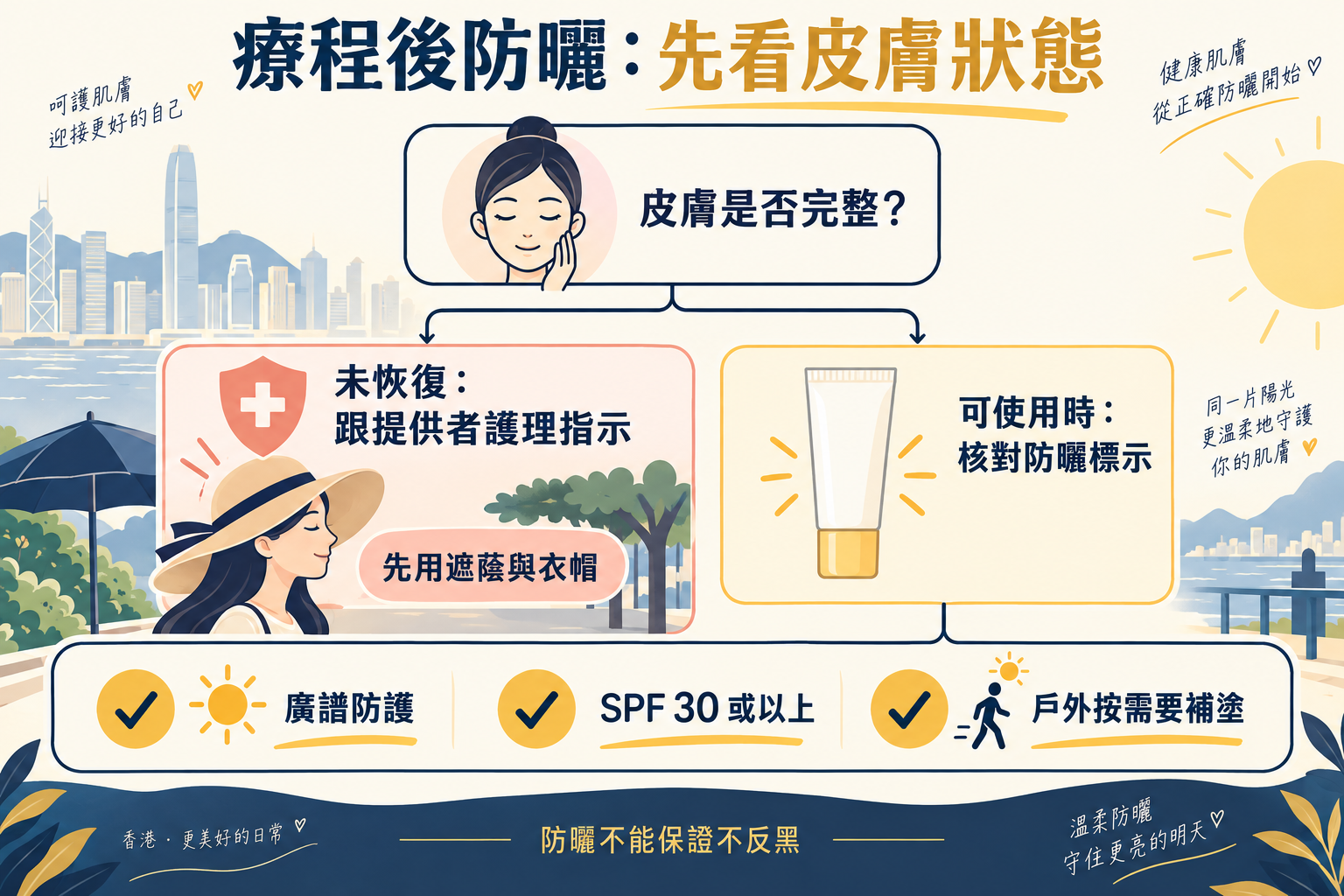
This AI-generated diagram has Traditional Chinese labels. It does not give an individual recovery timetable.
Identify whether the surface is injured
Some procedures cause transient reactions; others involve crusting, exudate or surface care. Non-invasive facial instructions cannot be transferred to resurfacing, fractional CO2 or microneedling. Do not independently apply ordinary sunscreen to an open wound.
MSK's fractional CO2 information places recovery and sun protection within a specific care plan. Ask what skin condition permits the specified product and what to do if it stings. It is not a universal timing rule for every laser.
Understand SPF, UVA, PA and broad spectrum
| Label | Meaning to check | Avoid assuming |
|---|---|---|
| SPF | Primarily a UVB-related testing indicator | A timer for hours in the sun |
| Broad spectrum | UVA and UVB protection | No need for shade or reapplication |
| PA or another UVA system | Protection under its respective standard | Every market's symbols convert directly |
| Water resistance | Labelled test and use conditions | All-day resistance to sweat and friction |
| Tinted formula | Some iron-oxide formulas add visible-light protection | Colour alone establishes adequate UV protection |
AAD recommends daily broad-spectrum SPF 30 or higher with suitable water resistance. Tinted formulas can be relevant for certain pigmentation concerns, but UV labelling still matters. AAD selection guidance
Choose a tolerated formulation
First establish whether products are permitted. Then consider the actual formulation, previous reactions and comfortable application. Mineral, organic-filter or tinted categories do not alone guarantee tolerance on recovering skin. Check complete ingredients and the provider's advice.
Do not start several new products together. If a product causes persistent discomfort, obtain advice rather than assume irritation is necessary for protection.
Plan Hong Kong commuting protection
Consider the walk to transport, queues, outdoor lunch and weekend activities, not just the office day. Use shade, appropriate clothing and hats, and reduce avoidable exposure during recovery. Check Hong Kong Observatory UV information alongside actual conditions and location.
Before a procedure, discuss how commuting and work can accommodate its recovery requirements. A practical plan is more useful than being told only to buy SPF 50.
Separate reapplication from makeup
Use an adequate, even amount according to the label. Sweat, water and wiping affect protection. A common outdoor reference is reapplication around every two hours, adjusted for labelled instructions and activities. A thin layer of SPF makeup is not automatically sufficient sunscreen.
Do not use foundation to cover redness when makeup is unsuitable. Once permitted, discuss reapplication and tolerated removal. Powders and sprays must be assessed by their instructions and realistic coverage rather than convenience alone.
Pigmentation has several influences
Inflammation, individual tendency, the procedure and care can affect pigment changes. Sunscreen is one part of management and does not guarantee no post-inflammatory pigmentation. A missed application alone cannot establish the cause of every change.
Bring dates, original photos and products for worsening pigmentation or persistent reactions. Avoid independently adding strong acids, brightening products or another laser to chase a mark before assessment.
Five questions before leaving
- Is the skin intact, and does any area need special care?
- Which sunscreen is permitted, and what reaction means stop?
- How should work and exposure be managed while products are unsuitable?
- How should makeup, removal and reapplication fit recovery?
- When is reassessment, and who handles unusual pain, blisters or swelling?
Frequently asked questions
Does SPF 50 remove the need to reapply?
No. Amount, sweat and friction still matter.
Is tinted always better?
No. Pigmentation concerns, tolerance and actual protection labels should guide selection.
Can I immediately use my normal sunscreen after CO2?
Do not decide independently. Surface injury changes product timing and choice.
Should I tolerate stinging?
Persistent irritation needs advice. Stop a newly irritating product and discuss appropriate alternatives and protection.
Does sunscreen guarantee no pigmentation?
No. Appropriate assessment, procedure, care and follow-up remain necessary.
Related care guides
See CO2 recovery, Trinity aftercare and new-product testing. Follow your treating professional's individual written plan.