
30-Day Trinity Liftoning Salon Launch Plan
A successful Trinity launch is an operating project, not a single social-media announcement. The salon needs a verified product, trained staff, controlled protocols, honest menu copy, client-screening records, aftercare and a service plan before opening general bookings.
This 30-day framework assumes the salon already has lawful premises and appropriate professional oversight. It is not a clinical protocol, and no client treatment should begin until the device manual, local requirements and staff competency are satisfied.
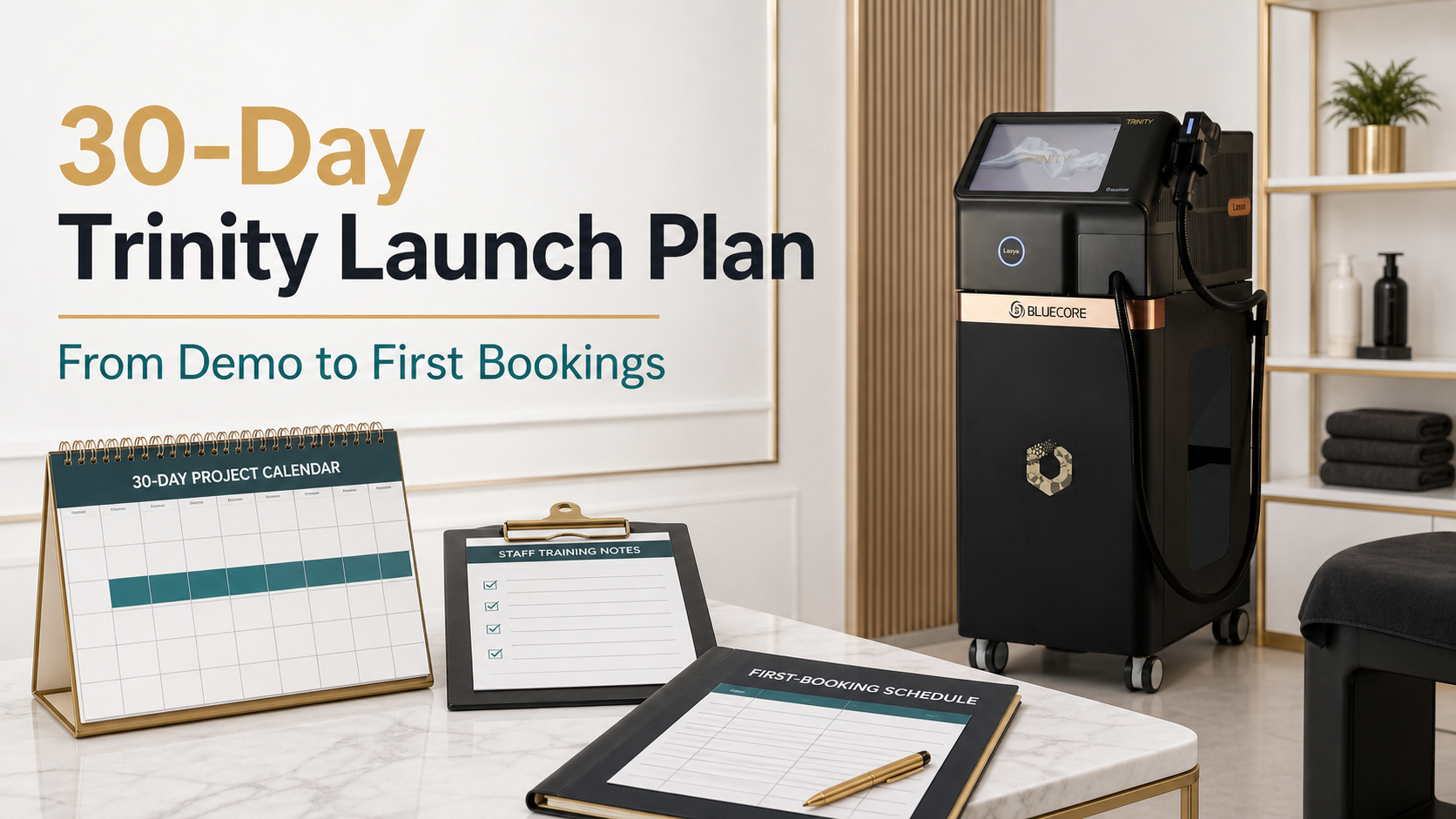
Before Day 1: Define the Launch Gate
Do not start the countdown from the deposit date. Start when the salon has:
- a written quotation for the exact model and applicators
- verified manufacturer and regulatory records
- a confirmed delivery, installation and training plan
- suitable power, room access and laser-safety controls
- a named clinical or operational lead within local requirements
- a warranty and fault-escalation contact
- an approved budget and conservative payback model
If any mandatory item is unresolved, pause the launch rather than compressing it into the final week.
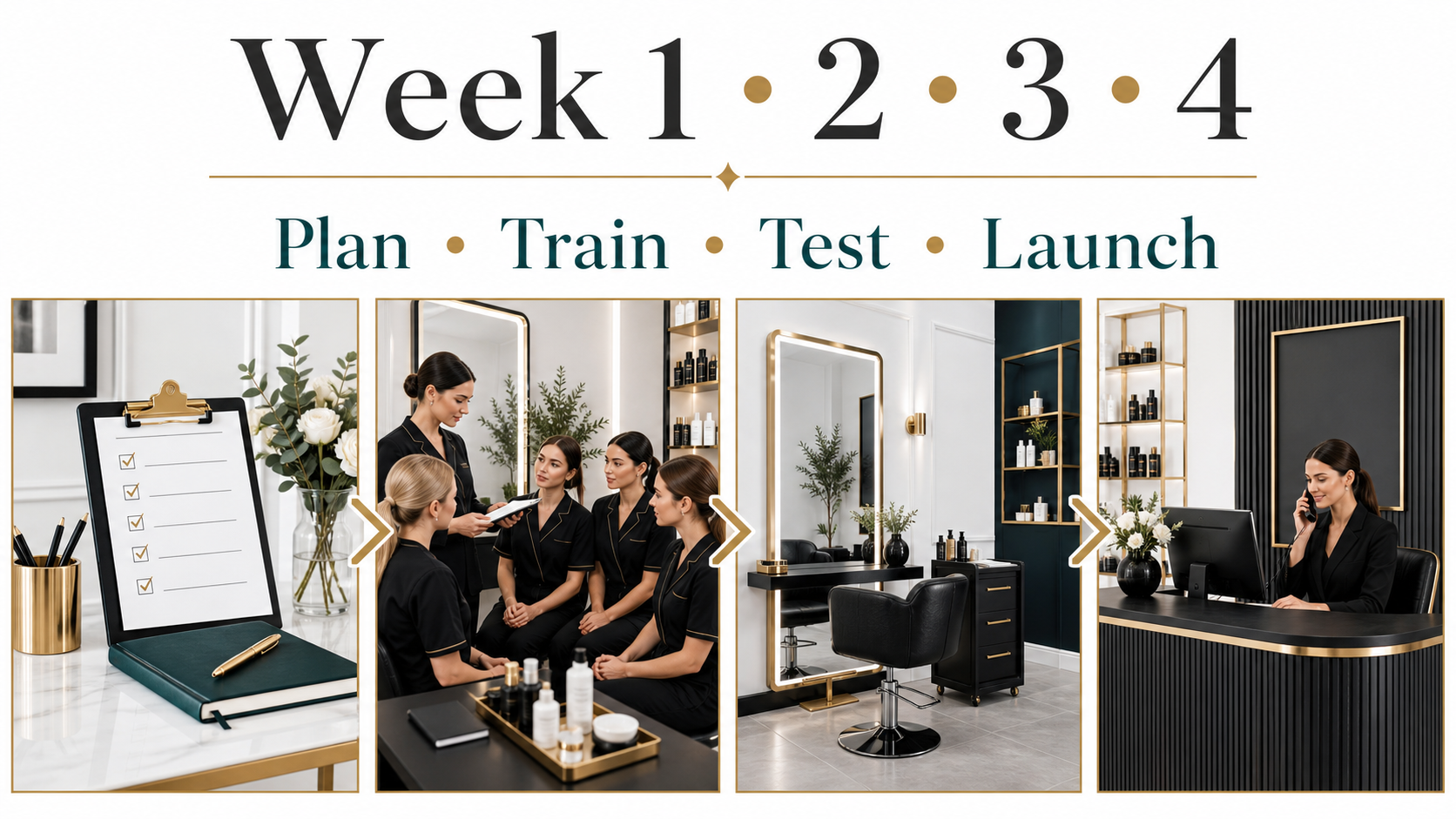
Week 1: Plan and Verify
Days 1-2: Receive and inspect
Photograph packaging, match serial numbers, check accessories and retain shipping material until acceptance is complete. Match the device label, invoice, packing list and warranty. Confirm which applicators are present.
Days 3-4: Build the controlled document set
Store the current manual, product specification, regulatory evidence, training material, cleaning instructions, maintenance schedule, warranty and support contacts in one controlled location. Assign a document owner and revision log.
Days 5-7: Prepare the room and workflow
Map client entry, consultation, photography, treatment, cleaning and exit. Check eyewear, warning signs, access control, reflective surfaces, emergency stop, electrical supply, ventilation and secure record storage. Perform a dry run without energy delivery to a client.
Week 1 gate: product identity, room controls and documents are complete.
Week 2: Train and Test the Process
Days 8-10: Core training
Training should cover intended use, exclusions, skin assessment, applicators, three modes, settings authority, contact cooling, laser safety, eyewear, cleaning, records, aftercare, expected responses, stop criteria and adverse-event escalation.
Days 11-12: Staff assessment
Use written questions, device setup, fault scenarios and supervised workflow observation. Attendance is not competence. Record who is cleared to consult, operate, supervise, clean and troubleshoot.
Days 13-14: Internal rehearsals
Run the whole appointment with staff acting as client and operator: booking, privacy notice, consultation, consent, photographs, room setup, verbal communication, documentation, cleaning, aftercare and follow-up booking.
Week 2 gate: named staff pass the defined competency assessment and the full appointment can be completed without skipped steps.
Week 3: Controlled Pilot
Select pilot participants properly
Do not recruit people merely because they agree to free treatment. Apply the same eligibility, consent, privacy and expectation standards planned for paying clients. Avoid incentives that pressure participants to publish only positive feedback.
Limit the pilot
Start with a small number the trainer and operational lead can supervise. Leave enough time between appointments to review records and room turnover. Do not use the pilot to test unauthorized claims or improvised combinations.
Review each case
Check consultation completeness, mode selection rationale, settings records, cooling checks, immediate response, aftercare and follow-up. Record deviations and retrain before the next participant.
Finalize client-facing copy
Use qualified wording. State that suitability is assessed, sensation and response vary, and the exact service follows product labelling and professional judgment. Do not use "zero pain," "zero risk," "instant V-face," "permanent brightening" or an unsupported FDA lifting claim.
Week 3 gate: pilot records are complete, recovery follow-up is satisfactory, deviations are closed and public copy is approved.
Week 4: Soft Launch and First Bookings
Days 22-24: Open to an existing-client segment
Invite clients whose previous records make consultation efficient, while still completing a full new assessment. Cap daily volume so staff can review every case.
Days 25-27: Review booking data
Track qualified enquiries, attended consultations, eligibility, conversion, appointment cycle time, collected revenue, rebooking, cancellations and support questions. Do not optimize for volume before the process is stable.
Days 28-30: Approve general availability
The operational lead should review safety, records, client communication, room capacity, service response and financial performance. Only then expand bookings or paid promotion.
Week 4 gate: the salon can deliver the service consistently without skipped controls, misleading claims or unrealistic capacity.
Marketing Assets to Prepare
- Product page using exact, qualified descriptions
- Frequently asked questions with honest limitations
- Consultation booking page, not an instant treatment purchase button
- Before-and-after photography consent separate from treatment consent
- Aftercare page and downloadable record
- Staff scripts for price, pain, results and alternatives
- Clear package terms, refund rules and expiry information
Hong Kong direct-marketing rules require appropriate notice and consent before using personal data. A client agreeing to treatment has not automatically agreed to promotional messages or public use of photographs.
First-Month Dashboard
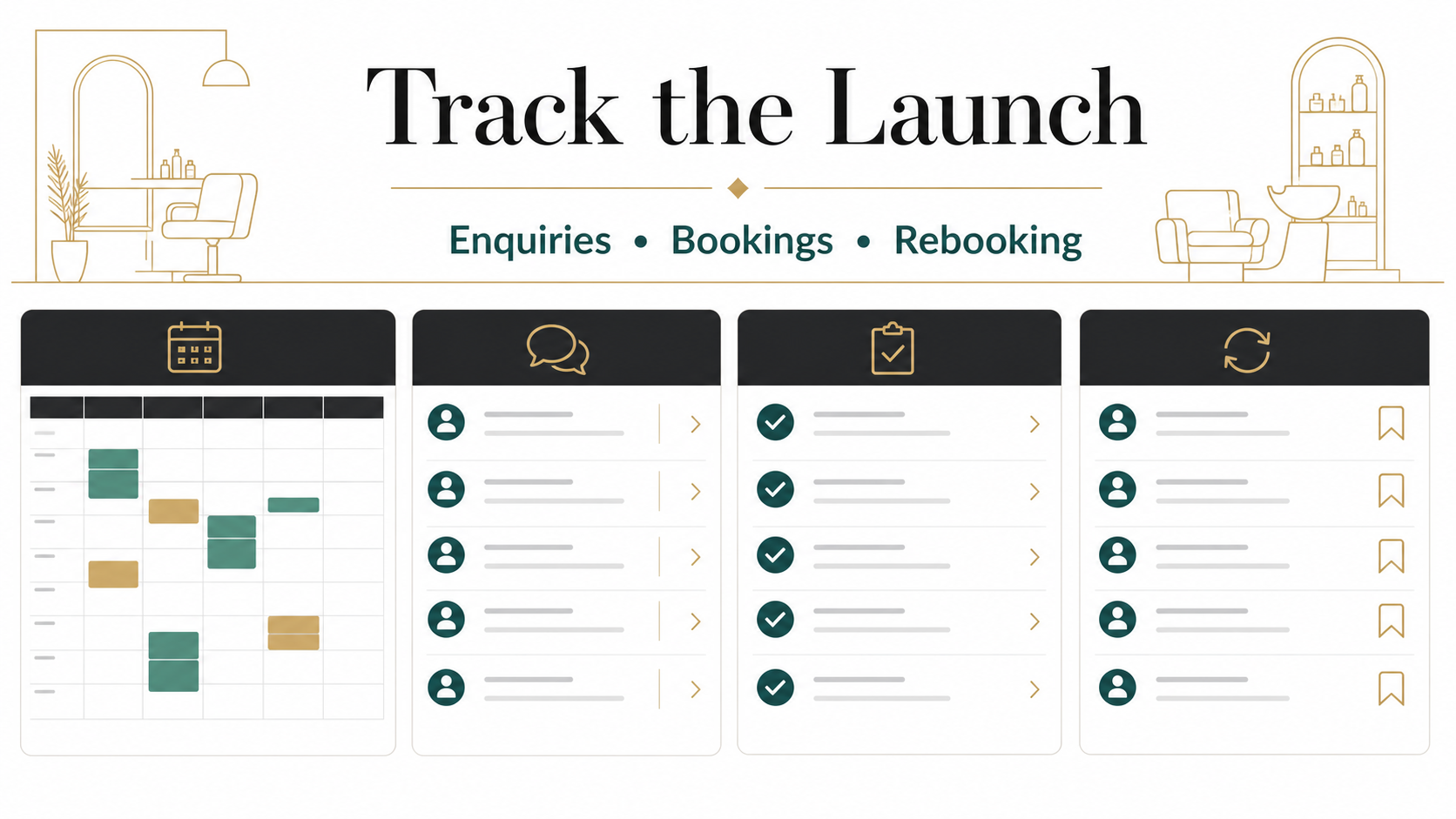
| Metric | First-Month Use |
|---|---|
| Qualified enquiries | Tests whether content attracts relevant clients |
| Consultation attendance | Finds scheduling and reminder issues |
| Eligible after assessment | Shows targeting quality |
| Completed paid treatments | Core operating volume |
| Full appointment cycle time | Sets safe room capacity |
| Average collected revenue | Captures discounts and refunds |
| Rebooking after review | Measures fit without pressuring the client |
| Record completeness | Audits operational discipline |
| Adverse responses | Triggers safety review and escalation |
| Downtime and support response | Tests supplier readiness |
Do not set a target of zero adverse-event reports. That can discourage staff from documenting concerns. Set a target of prompt, complete reporting and appropriate action.
Stop-Launch Conditions
Pause new bookings if:
- product identity or supplied applicator is unclear
- cooling, display, footswitch or safety control is unreliable
- staff operate outside the approved protocol
- records are repeatedly incomplete
- an unexpected reaction has not been reviewed
- public copy uses unsupported or prohibited claims
- warranty or technical support becomes unavailable
- room volume causes rushed consultation or cleaning
Launch Budget
Include training hours, pilot appointments, photography and consent systems, safety equipment, launch materials, staff meetings, maintenance reserve and contingency. Keep the marketing budget separate from the device payback model so the true acquisition cost remains visible.
Request a Demonstration and Launch Scope
Use the Trinity product page, the three-mode guide, and the ROI framework when defining the launch scope. Asia Pacific Beauty Group can discuss a demonstration, exact package, training, documentation, delivery and after-sales support through the contact page. Ask for the supplier's and salon's launch responsibilities to be written into the quotation or implementation plan.
Frequently Asked Questions
Can the salon launch immediately after delivery?
Only after installation, document review, room safety and staff competency are complete. Delivery is not the launch gate.
How many pilot clients are required?
There is no universal number. Use the training plan, local requirements and enough supervised cases to demonstrate consistent workflow without treating people as experiments.
Should pilot treatments be free?
That is a commercial choice, but normal eligibility, consent, privacy, records and follow-up still apply. Incentives must not buy misleading testimonials.
Can the salon use the manufacturer's before-and-after images?
Only with permission, accurate context and compliance with local advertising rules. Do not imply the images are your salon's results.
When should paid advertising begin?
After the controlled pilot, copy approval, booking controls and support route are stable, not simply when the machine arrives.
This is an operational planning framework, not a clinical protocol, guarantee of results or substitute for legal and professional advice.