
Trinity Liftoning Treatment Modes: Salon Menu Planning Guide
BLUECORE presents Trinity with three treatment modes: Brightening & Firming, Elastic Regeneration and Contour Sculpting. These names can help a salon organize consultations and service menus, but they should not be treated as three guaranteed results or as permission to use unrestricted claims.
A preset is part of a device workflow. The operator still needs to assess the client, confirm eligibility, follow the current manual, select permitted settings, monitor endpoints, record the session and provide aftercare.
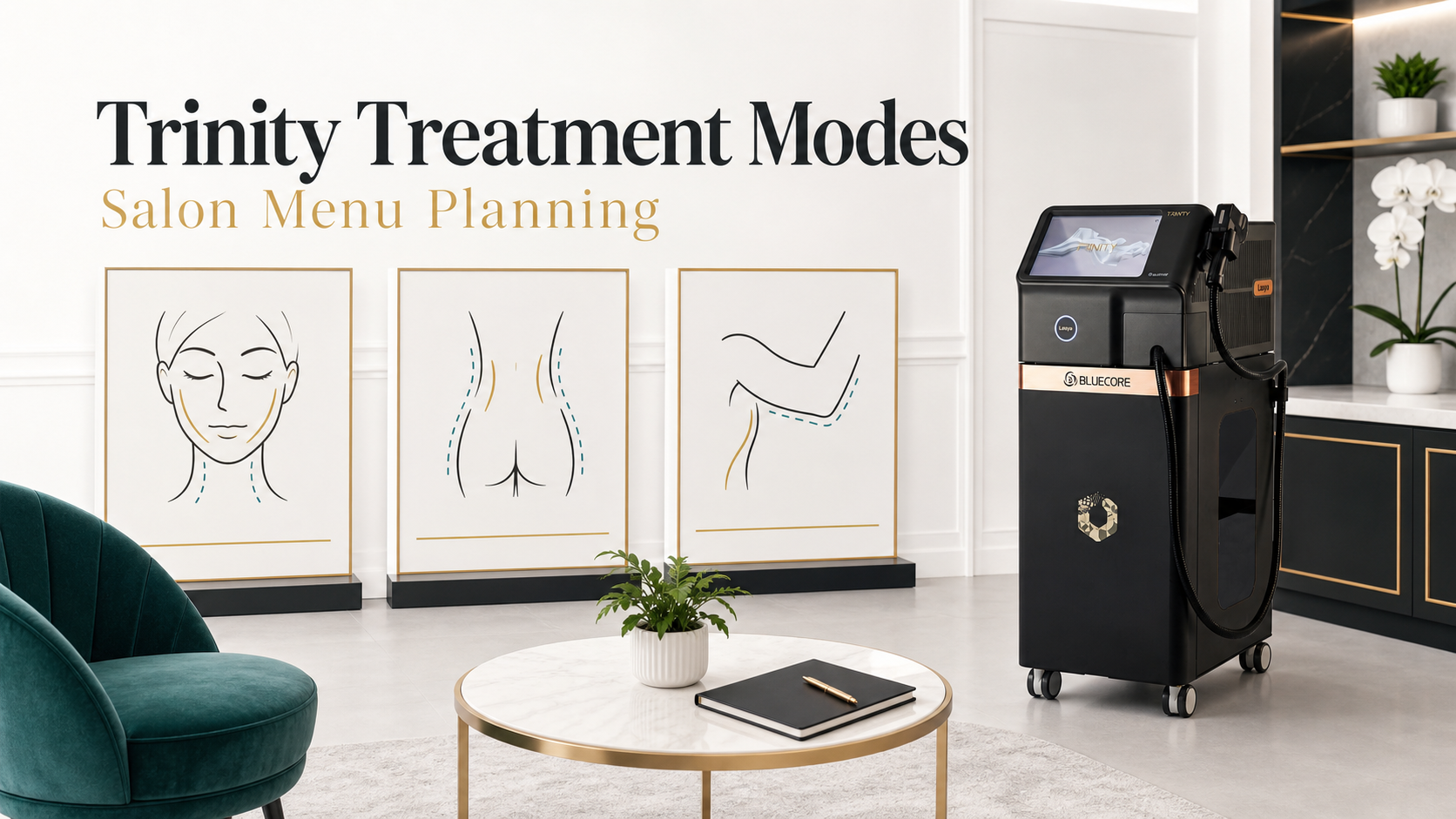
What the Three Modes Mean for Menu Design
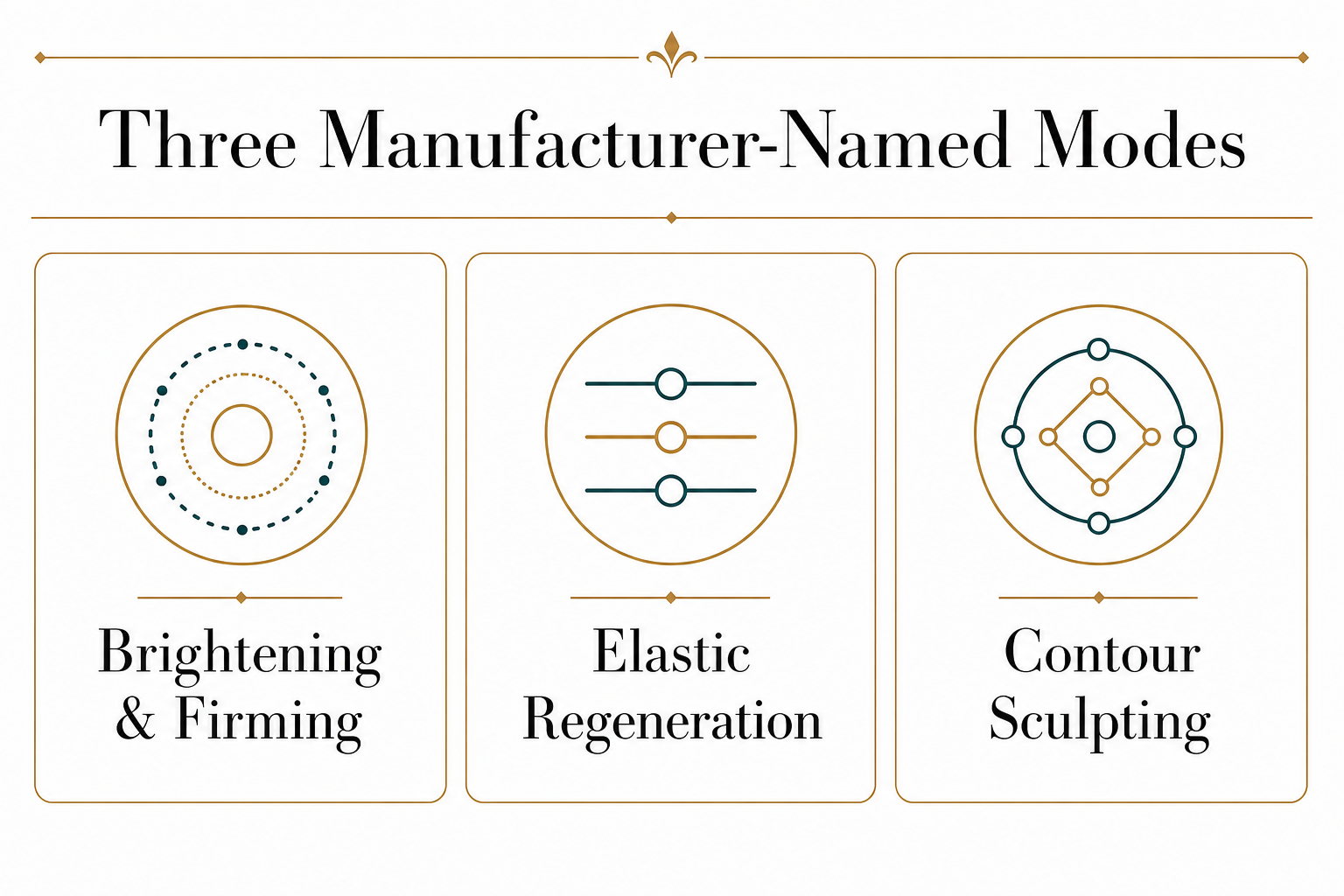
| Manufacturer Mode Name | Client Conversation | Menu-Planning Caution |
|---|---|---|
| Brightening & Firming | Discuss visible tone, surface appearance and mild firmness goals | Do not promise pigment removal, whitening or a specific degree of lift without product-specific evidence and a permitted indication. |
| Elastic Regeneration | Discuss the appearance of resilience, texture and general skin quality | "Regeneration" can be interpreted medically. Use wording approved for the market and explain that response varies. |
| Contour Sculpting | Discuss the appearance of facial definition and areas of concern | Do not imply fat removal, structural change or surgical-equivalent contouring unless expressly supported and authorized. |
The names are useful consultation headings. They are not a diagnosis, clinical endpoint or substitute for operator judgment.
First Verify What Each Mode Controls
Before placing the names on a price list, ask the supplier or trainer:
- Is the mode a fixed preset or a starting range?
- Which parameters change between modes?
- Which parameters remain adjustable?
- Is the same applicator used for all modes?
- What treatment area and intended use are stated in the manual?
- What visible or measured endpoint should the operator monitor?
- What requires an immediate stop?
- Are protocols different by skin type or market label?
Do not reverse-engineer treatment parameters from social-media videos or another salon's menu.
Build the Menu Around Goals, Not Promises
Option 1: Consultation-led single session
Use one base service name such as Trinity Personalised Consultation and Treatment. The mode is selected after assessment. This keeps the consumer menu simple and gives the operator room to choose the appropriate workflow.
Option 2: Three clearly differentiated pathways
Use the manufacturer mode names as internal pathways, then write consumer descriptions in qualified language. Explain the area, appointment length, expected sensations, normal short-term responses, aftercare and review point. Avoid outcome guarantees.
Option 3: Course planning with review gates
If the manual and local requirements allow a series, sell a plan that includes formal reviews rather than a rigid promise of a set number of sessions. Record why another session is appropriate before proceeding.
A Safer Client Journey
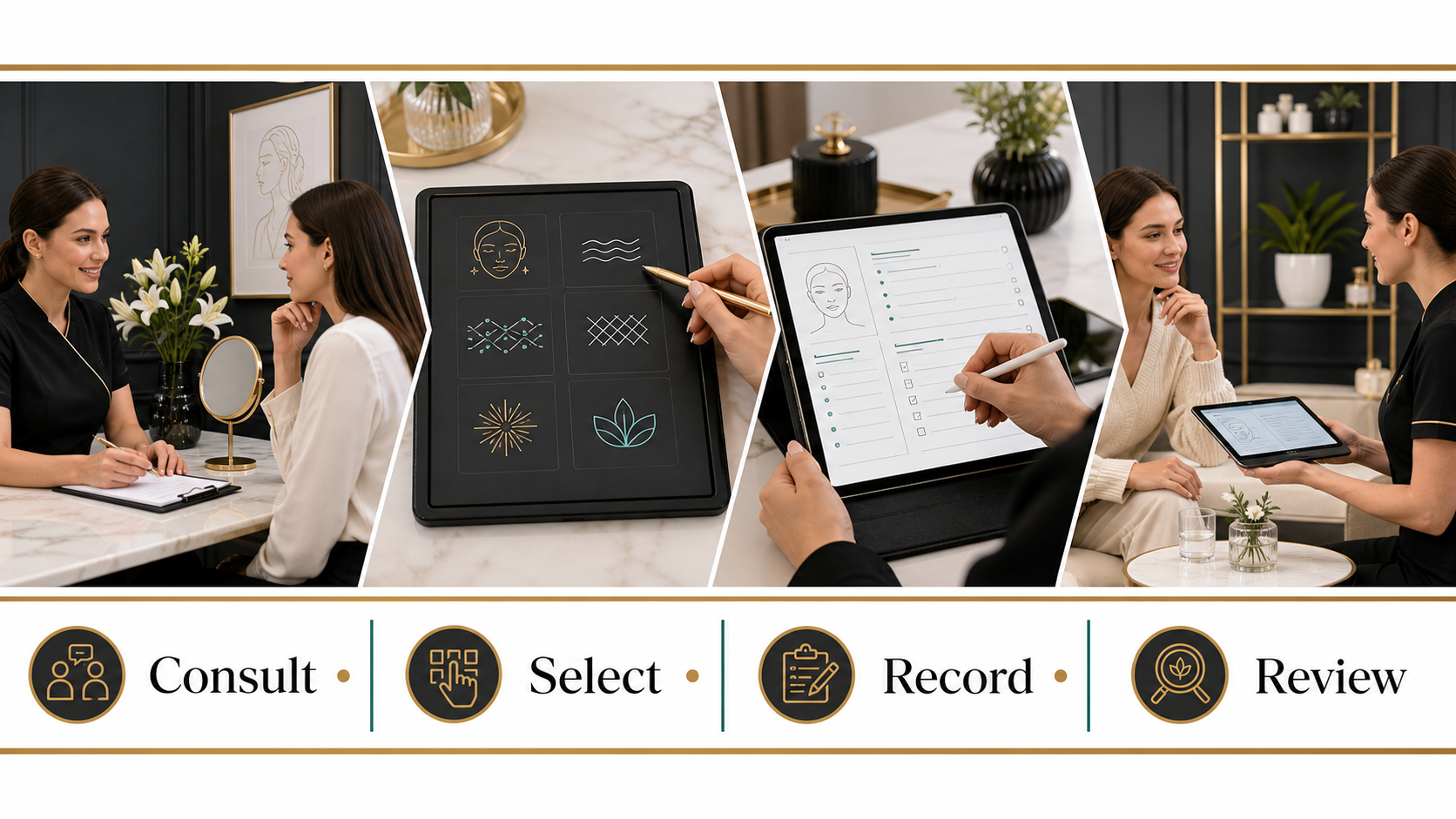
1. Consult
Record the client's main concern, treatment history, current skincare, medicines, recent sun exposure, previous reactions and expected outcome. Refer or decline when the concern falls outside the salon's competence or the product label.
2. Assess
Follow the device manual and training for skin assessment, exclusions and any test-area requirement. Check that photographs use consistent lighting, angle, distance and consent.
3. Select
Choose the mode and permitted settings based on the assessment. Document why it was selected. A client asking for the strongest option is not a selection rule.
4. Treat
Verify model, applicator, cooling, eyewear and room controls. Monitor contact, client feedback and the instructed endpoint throughout the session.
5. Record
Record mode, settings, passes or delivery method, area, cooling, operator, products used, immediate response and advice given. Do not store treatment photographs in an uncontrolled personal device.
6. Review
Review recovery and outcome at an appropriate interval. Note any unexpected redness, swelling, blistering, crusting, pigment change, pain or prolonged sensitivity and follow the escalation pathway.
Suggested Menu Information
Every service description should state:
- who the consultation is for
- which area is assessed
- approximate total appointment time
- that suitability is determined before treatment
- that sensation and response vary
- likely short-term skin response using qualified wording
- aftercare requirements
- circumstances requiring professional review
- price and package terms without hidden compulsory add-ons
Avoid visible technical parameter lists on the consumer menu. Those belong in controlled protocols and training records.
Pricing the Modes
Do not automatically charge by the attractiveness of the mode name. Price by the resources used: consultation, treatment time, operator grade, room time, consumables, aftercare and review. If all modes use similar time and resources, one transparent base price may be clearer.
If prices differ, explain the operational difference. A higher price should not imply that the setting is stronger or guaranteed to produce a better result.
Marketing Claims That Need Control
| High-Risk Wording | Better Direction |
|---|---|
| "Instant V-face" | Describe a personalized contour-focused consultation without guaranteeing shape change. |
| "Rebuilds collagen by a fixed percentage" | Only use quantified claims supported for the exact device, protocol and market. |
| "Permanent brightening" | Explain that visible response and maintenance vary, and sun protection remains important. |
| "Zero pain, zero risk" | Explain the cooling feature and expected sensation without absolute safety promises. |
| "FDA-approved lifting mode" | Verify the exact K241951 indications; do not convert the product name into an FDA claim. |
Staff Training Checklist
- Product identity and applicators
- Three-mode purpose and parameter boundaries
- Intended use and market-specific claims
- Client screening and referral criteria
- Laser classification, eyewear and room safety
- Cooling and contact checks
- Device startup, shutdown and fault response
- Cleaning and maintenance
- Treatment records and photography consent
- Aftercare and adverse-event escalation
- Supervised competency assessment
Menu Review After Launch
After the first month, review qualified enquiries, consultation conversion, completed sessions, average collected price, rebooking, client feedback, operator deviations, adverse responses and downtime. Change the menu when clients misunderstand a mode name or staff select it inconsistently.
Ask for a Trinity Demonstration
Review the Trinity product page and the before and aftercare guide when mapping the customer journey. Asia Pacific Beauty Group can discuss the configuration, manufacturer mode names, training, quotation and after-sales planning through the contact page. Ask to see the current product manual and training scope before finalizing consumer-facing menu copy.
Frequently Asked Questions
Are the three Trinity modes separate handpieces?
Do not assume so. Confirm the supplied configuration and how the current software and applicators implement each mode.
Can a client choose the strongest mode?
Mode selection should follow assessment, product labelling and operator training, not a strength ranking requested by the client.
Does Brightening & Firming mean skin whitening?
Not automatically. "Brightening" should be described carefully and must not imply a guaranteed change in natural skin colour or a medical pigment treatment.
Can the salon promise results after one session?
No universal promise is appropriate. Response varies by client, area, protocol and follow-up. Use documented, product-specific evidence and qualified wording.
Should all three modes have different prices?
Only when the resource, time or service package genuinely differs. Transparent pricing is more important than creating artificial tiers.
This guide is for menu and workflow planning. It is not a device protocol, medical advice or authorization for claims beyond the exact product labelling and local rules.