
How to Verify a Genuine EVE Titan: Authorisation, Serial Numbers and Warranty
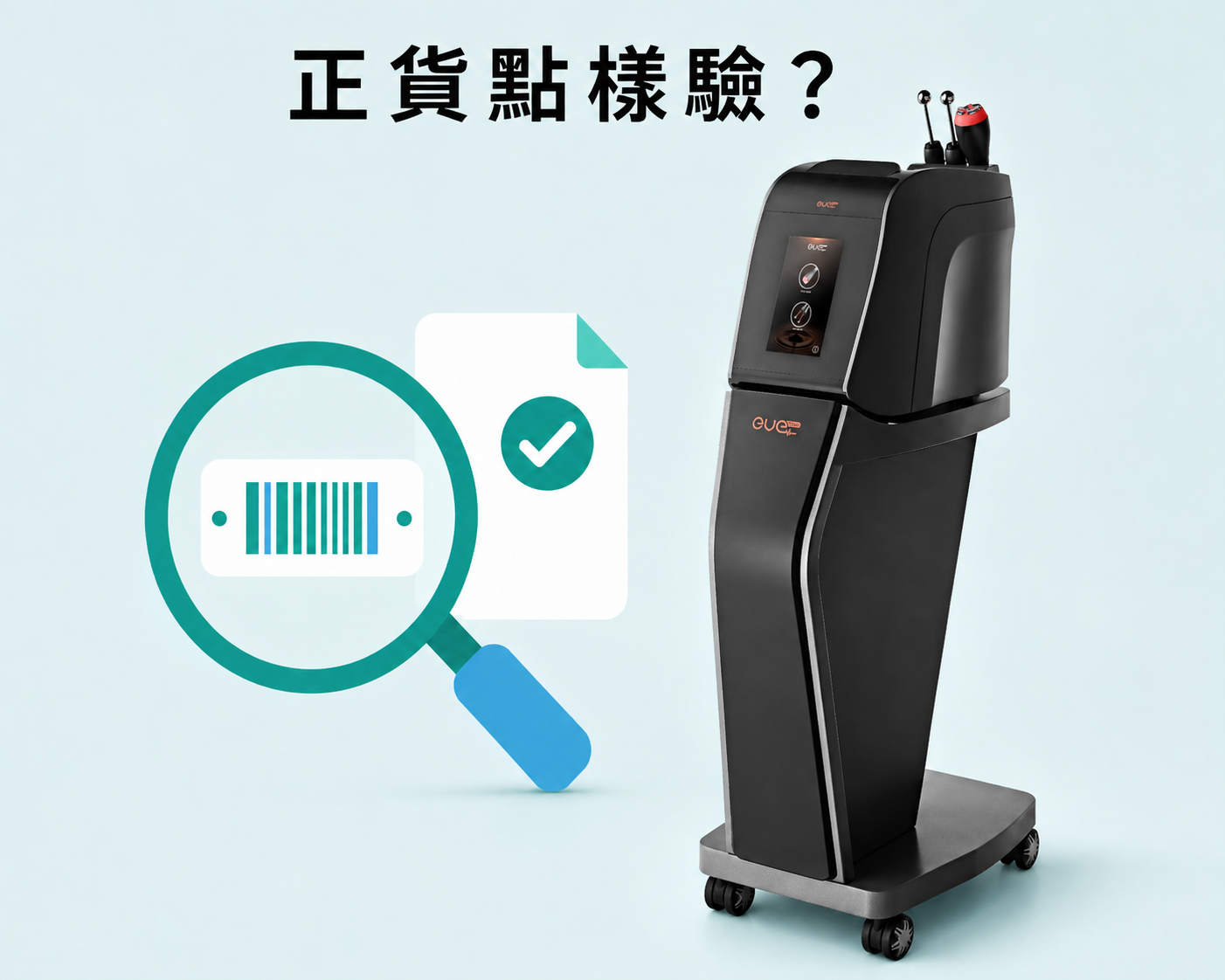
Verifying a genuine EVE Titan unit: authorisation chain, serial number, warranty liability and parallel imports
The most expensive mistake in beauty equipment procurement is rarely buying a counterfeit machine. It is buying a real machine that nobody will take warranty responsibility for.
This happens more often than people expect, and usually involves no fraud at all — the device is genuine, the invoice is genuine, and only one link in the chain between the manufacturer and your salon is missing. You discover it when you need a repair, a part or a software update, and find there is nobody to call.
This article sets out verification methods. It refers to no particular trader.
1. Where "genuine" disputes actually arise
Start by separating three questions that get run together:
Hardware authenticity — was this machine built by the manufacturer. In beauty equipment, outright counterfeit units are not the dominant risk.
The authorisation chain — does whoever sells you the machine hold manufacturer authorisation to sell it in your market. This is where problems most often occur.
Warranty liability — who bears it when something fails, under which contract, and where parts come from. This is the expensive one.
Most "bought the wrong machine" stories turn on the second and third questions, not the first.
2. The authorisation letter: who issues it, and what it must say
"We are the distributor" carries no verification value on its own. Ask for the document, and check these elements:
Element | Why it matters | Not acceptable |
|---|---|---|
Issued by the manufacturer itself | Authorisation issued by an upstream distributor is not manufacturer authorisation | Issued by another trading company |
Models explicitly listed | Authorisation may cover only some models | Brand name only, no model |
Territory explicitly listed | Authorisation is territorial; cross-territory sales may be void | No territory, or simply "Asia" |
Validity period and signature date | Expired authorisation is no authorisation | Undated or expired |
Scope of authorisation | Sales, service and training authorisation can be separate | Sales authorisation with no service authorisation |
Verifiable contact details | You should be able to check directly with the manufacturer | Only the distributor's own contact details |
The most practical step: once you have the letter, email the manufacturer to verify it. A genuine authorised distributor will not mind. If someone discourages you from contacting the manufacturer directly, that in itself is information.
3. Serial numbers and matching against manufacturer records
At delivery, check and photograph everything: model code, serial number, accessory and treatment head list, and the packing list.
Then give the serial number to the manufacturer or authorised distributor and confirm three things: whether the number exists in the manufacturer's records, the date of manufacture, and the destination market it was shipped to. The third is asked least often, yet it is exactly what separates an official unit from a parallel import — a machine originally exported to another market and subsequently traded into yours carries a perfectly genuine serial number, but its warranty arrangements may be entirely different.
As a reference point you can check yourself: EVE Titan is listed in the US FDA device registration and listing database by WEERO Co., Ltd. (registration number 3016087653). That is not proof of a genuine unit, but it lets you confirm the manufacturer's legal identity and registration status. The full regulatory verification method is in our guide to verifying Korean beauty device certifications.
4. Parallel imports versus official units in practice
"The parallel unit is tens of thousands cheaper" is the usual temptation. To judge whether it is worth it, compare the saving against the real cost of these five items:
Item | Official (local authorised distributor) | Parallel import |
|---|---|---|
Warranty | Carried by the local distributor under contract | Usually only the seller's verbal assurance, or return to the source market |
Parts | Ordered through authorised channels with known lead times | May not be orderable through official channels |
Repair | Local technical support, possibly with a loan unit | Arranged yourself; downtime is not controllable |
Software updates | Normally provided with authorisation | May be unavailable or chargeable |
Training | Provided by manufacturer or distributor, extendable to new staff | Usually one-off, with no route to train later hires |
Downtime cost is the item most often underestimated. Three months out of service costs more than lost treatment revenue — there is also the delivery obligation on courses already sold. That is especially serious for course-based treatments, where you have taken the money but cannot deliver. The cash-flow and liability analysis is in pricing and payback for course-based EMS treatments.
5. Where warranty liability actually sits
Warranty disputes are never really about whether a warranty exists. They are about who carries it and under what terms. Put the following into the contract rather than relying on verbal assurances:
The date the warranty period starts (delivery or first use), which components are covered, whether consumables are included, on-site versus return-to-base repair, whether a loan unit is provided during repair, expected parts lead time, how labour is charged outside the warranty period, and what voids the warranty — for example self-repair or the use of non-original consumables.
That last item deserves particular attention. Some manufacturers' terms are voided by using non-original consumables, and a parallel-import unit often faces both problems at once: uncertain consumable supply and a voided warranty.
6. Seven checks before purchase
# | Check | Completion standard |
|---|---|---|
1 | Manufacturer authorisation letter | Original or scan obtained, and verified directly with the manufacturer |
2 | Model and territory scope | Authorisation explicitly covers your model and your market |
3 | Serial number | Confirmed with the manufacturer: exists, date of manufacture, destination market |
4 | Regulatory documents | K-number, registration number, CE certificate number, manufacturer's intended use statement |
5 | Warranty contract | Written terms covering the eight points in section 5 |
6 | Parts and consumables | Source of supply, per-session cost, expected lead time |
7 | Training arrangements | Hours, content, whether anatomical placement is covered, provision for new staff |
Due diligence is complete only when all seven have written answers. The broader supplier assessment is in our supplier evaluation framework; verifying distributor tiers for Korean manufacturers is covered in our Korean beauty device distributor guide.
Frequently Asked Questions
How do I tell an authorised distributor from a general trader?
Ask for the written authorisation letter and check six elements: whether it was issued by the manufacturer itself, whether models are explicitly listed, whether the territory is explicitly listed, whether it carries a signature date and validity period, whether the scope includes service and training, and whether it gives verifiable manufacturer contact details. The most practical step is to verify the letter directly with the manufacturer — a genuine authorised distributor will not mind.
Are parallel-import machines really cheaper?
The purchase price is usually lower, but compare the saving against five real costs: who carries the warranty, whether parts can be ordered through official channels, whether a loan unit is available during repair, whether software updates can be obtained, and how new staff will be trained later. Downtime cost is the most underestimated — when a course-based treatment has been paid for but cannot be delivered, the loss far exceeds the price difference.
What can a serial number tell me?
Three things: whether the number exists in the manufacturer's records, the date of manufacture, and the destination market it was shipped to. The third is asked least often but is exactly what separates an official unit from a parallel import. A machine originally exported elsewhere and later traded into your market has a perfectly genuine serial number, yet its warranty arrangements may be entirely different. Photograph the serial number and packing list at delivery.
What should I watch for in warranty terms?
At least eight points belong in the contract: the warranty start date, components covered, whether consumables are included, on-site or return-to-base repair, loan unit availability, expected parts lead time, labour charging outside the warranty period, and what voids the warranty. The last matters most — some manufacturers' terms are voided by non-original consumables, which is precisely the compounding problem parallel imports tend to create.
Conclusion: verification costs far less than the failure does
All seven checks take perhaps one to two weeks and require no specialist knowledge — only asking for documents and confirming them one by one.
By comparison, a device with no service support that sits idle for three months usually costs more than the entire verification process. In beauty equipment procurement, the expensive part is never the purchase price. It is the period after the machine fails when there is nobody to call.
For Titan authorisation documents, serial verification, warranty terms or parts lead times, contact us to request them.
This article is general procurement reference, does not constitute legal advice, and refers to no particular trader. The registration data cited was retrieved from public databases on 20 August 2026 and may change; verify current status yourself at the time of purchase. Authorisation scope and warranty terms are governed by the individual contract.