
Import Beauty Equipment from Hong Kong: An Overseas Buyer’s Guide
Buying professional beauty equipment from another market involves more than choosing a machine from a catalogue. An overseas salon, spa, aesthetic centre or distributor also needs to confirm product suitability, documentation, voltage, shipping terms, customs responsibility, staff training and after-sales arrangements before paying a deposit.
Asia Pacific Beauty Group was established in Hong Kong in 1998 and provides professional beauty equipment agency, wholesale and consultancy services. Overseas buyers can use the company’s Hong Kong team as a starting point for product enquiries, demonstrations, quotation discussions and support planning. Product availability, export arrangements and destination-market suitability must still be confirmed for each model and country.
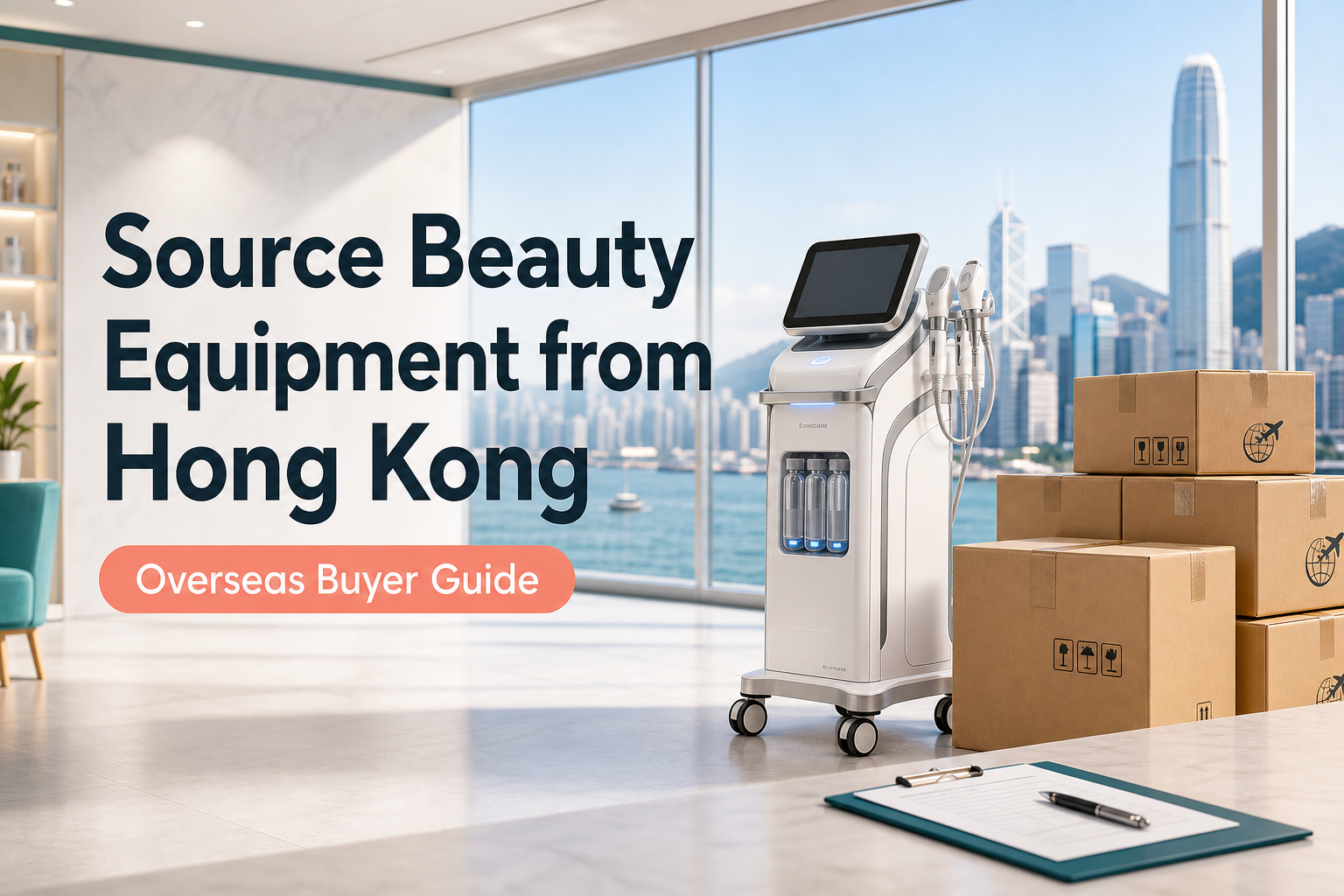
Overseas buyer sourcing professional beauty equipment from Hong Kong with shipping boxes and Hong Kong skyline
Why Overseas Buyers Source Beauty Equipment Through Hong Kong
Hong Kong is an established trading and service centre with international freight connections, bilingual business communication and a large professional beauty market. For an overseas buyer, the practical advantage is access to product categories, commercial documentation and supplier communication through one regional location.
The value, however, does not come from the words “Hong Kong supplier” alone. A buyer should still evaluate the actual distributor, the product documentation and the support package. Asia Pacific Beauty Group’s published service scope includes equipment selection, training discussions, maintenance follow-up and B2B consultancy. These are particularly important when a machine will become a recurring part of a salon’s treatment menu.
Overseas buyers can browse professional beauty equipment, review medical skincare products and learn more about Asia Pacific Beauty Group before submitting an enquiry.
Prepare These Details Before Requesting a Quotation
A message saying “Please send your best price” rarely produces a useful international quotation. Provide enough information for the supplier to understand the market, intended use and support required.
Information to Provide | Why the Supplier Needs It |
|---|---|
Destination country and city | Regulations, freight options, voltage and warranty logistics vary by location. |
Business type | A single salon, multi-branch spa and national distributor require different quantities and support. |
Target treatment category | Specify lifting, RF, body care, facial care, scalp care, laser or a full salon setup. |
Intended use and operator | The same technology may fall under different rules depending on claims and professional use. |
Preferred quantity | Ask whether pricing, packaging or training changes for one unit versus a wholesale order. |
Local voltage and plug | Confirm voltage, frequency, plug type and whether conversion is permitted. |
Required delivery date | Air freight and sea freight have different costs and lead times. |
Training language and format | Confirm whether training can be provided in English and whether it is online or in person. |
Import experience | Tell the supplier whether you have an importer, broker or freight forwarder. |
Budget range | A realistic range helps compare a single machine with a broader support package. |
Use the Hong Kong beauty equipment procurement guide if you need a more detailed internal buying workflow.
Choose the Product by Business Goal, Not Only by Technology
An overseas buyer should begin with the treatment menu and operating model. A popular device may still be unsuitable if the treatment time is too long, consumables are difficult to import or local rules restrict who can operate it.
Business Goal | Product Direction to Discuss | Questions to Raise |
|---|---|---|
Add facial firming services | RF, ultrasound or other non-invasive facial systems | Treatment time, energy settings, training, contraindications and expected consumables |
Build advanced lifting treatments | HIFU or MMFU categories | Cartridge cost, shot count, operator requirements, local classification and warranty |
Add body-treatment packages | Body contouring and body-care systems | Room space, power requirement, staffing, treatment duration and marketing claims |
Develop facial and scalp programmes | Hydration, cleansing, infusion or scalp-care systems | Handpieces, filters, solutions, hygiene process and reorder lead time |
Open a new salon | Mixed equipment package | Budget allocation, delivery sequence, installation, training and launch timeline |
Add retail and post-care revenue | Professional skincare and home-care products | Ingredients, registration, labelling, shelf life, minimum order and shipping conditions |
For category-specific planning, review the HIFU wholesale guide, Korean beauty device guide and equipment with skincare pairing guide.
A Practical Cross-Border Order Process
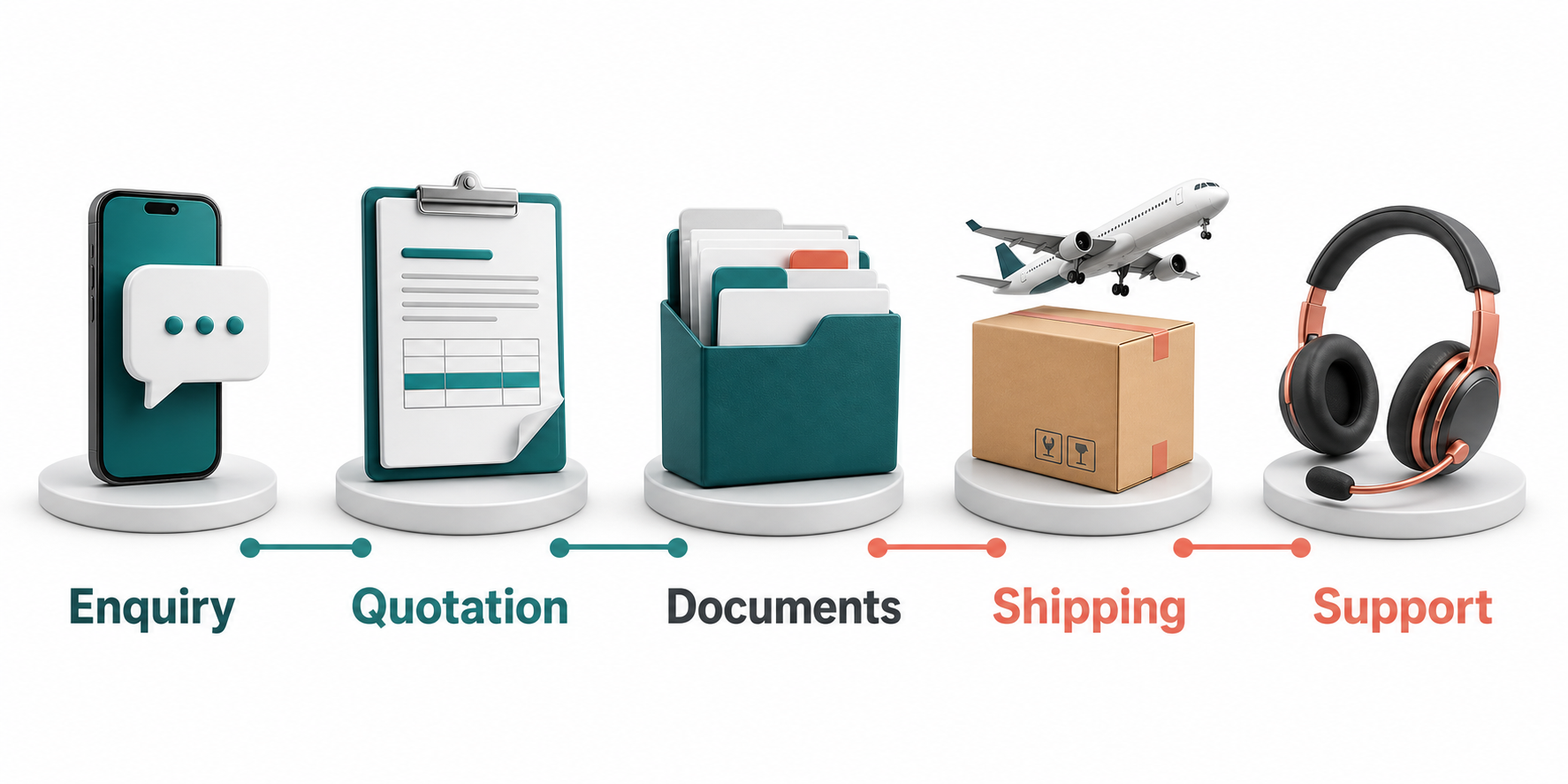
International beauty equipment order process from enquiry and quotation to documents, shipping and support
1. Confirm the intended use and destination requirements
Start by deciding whether the product will be used for general beauty care, professional aesthetic services or a purpose that may be regulated as a medical device in the destination country. Product classification often depends on intended use and claims, not just the machine’s appearance.
The buyer is normally responsible for confirming local import, registration, professional-use and advertising requirements. The United States FDA, European Commission, UK MHRA, Australia’s TGA and Singapore’s HSA all publish their own medical-device and importer requirements. Approval or registration in one market does not automatically authorize sale or use in another.
2. Request a product-specific quotation
Ask for the exact model, included handpieces, standard accessories, optional accessories, consumables, quantity, unit price, currency and quotation validity. The quotation should also identify what is not included, such as freight, destination tax, customs brokerage, installation or travel for onsite training.
Do not compare a machine-only quotation with a package that includes spare parts, training and warranty support as if they were equivalent. Use the beauty equipment ROI and payback guide to compare total ownership cost.
3. Review the document pack before paying
The documents required depend on the product and destination. A typical discussion may include a pro forma invoice, commercial invoice, packing list, product specification, user manual, warranty terms and shipment document. Some destinations or products may also require a certificate of origin, conformity documents, registration evidence, battery test summary or other product-specific records.
Ask for documents early enough for your customs broker or regulatory adviser to review them. A logo on a brochure is not a substitute for a certificate, declaration or searchable registration record.
4. Agree on the Incoterm and payment milestones
Incoterms define the allocation of transport costs, risk and certain delivery responsibilities between buyer and seller. They do not replace the sales contract and do not automatically settle payment timing, title transfer, product compliance or dispute terms.
The quotation should name the Incoterm and place precisely, for example “FCA Hong Kong [named location]” rather than simply “FOB” or “delivered.” Confirm the deposit, balance-payment trigger, inspection opportunity, bank charges and refund or cancellation terms in writing.
5. Confirm packing, freight and insurance
Large consoles may be priced by volumetric weight, require a pallet or crate, and need protection for touchscreens, handpieces and liquid accessories. Wood packaging may be subject to ISPM 15 requirements. Equipment containing lithium batteries may require IATA-compliant classification, packing, marks and documents for air transport.
Ask for the number of packages, dimensions, gross and net weight, packing method and whether the shipment contains batteries, liquids or fragile components. Decide whether air freight, courier or sea freight is appropriate and who will arrange cargo insurance.
6. Complete destination customs clearance
The destination importer or importer of record generally handles local customs entry, duties, taxes, permits and regulatory checks. The HS code affects declaration and tariff treatment, but the final classification is subject to customs rules. Share the product description and specifications with your broker instead of relying on a generic code copied from another machine.
Hong Kong export declarations and any applicable export controls are separate from the buyer’s destination requirements. Confirm both sides before shipment.
7. Plan installation, training and after-sales support
Before dispatch, confirm how installation will be checked, how training will be delivered and what happens if the unit arrives damaged or fails during use. Record serial numbers and photograph the external packaging before opening it. Keep the invoice, packing list, airway bill or bill of lading, inspection record and warranty correspondence together.
For remote support, confirm the contact channel, service hours, language, diagnostic process and whether local technicians may open the machine without affecting the warranty.
Documents Overseas Buyers Should Check
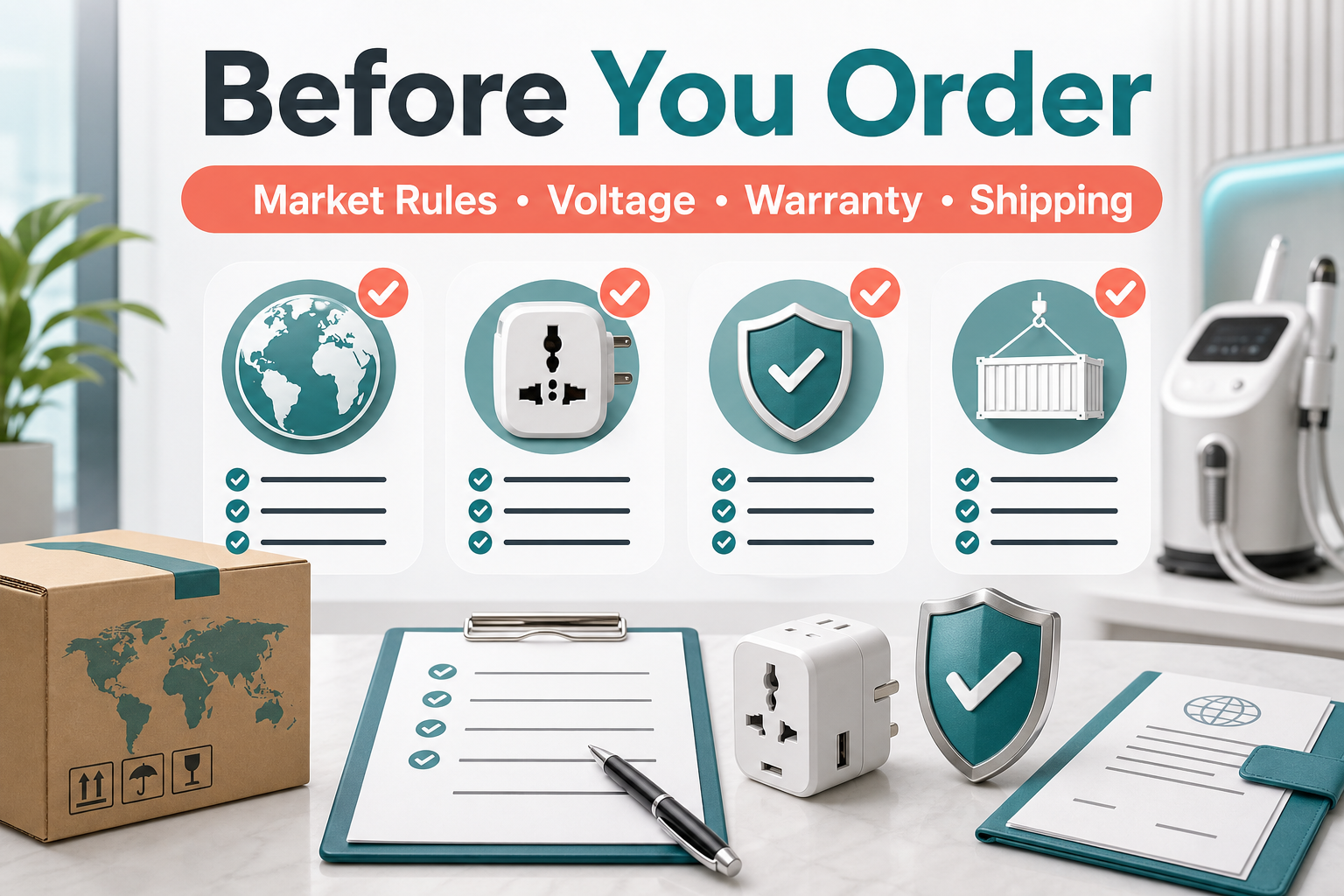
Overseas buyer document checklist for market rules, voltage, warranty and shipping
Document or Record | What to Check |
|---|---|
Pro forma invoice | Correct model, quantity, package contents, currency, Incoterm, payment schedule and validity |
Commercial invoice | Buyer and seller details, accurate description, quantity, value, country of origin and agreed trade information |
Packing list | Package count, dimensions, gross and net weight, carton or crate numbers and contents |
Product specification | Model number, intended use, power input, dimensions, handpieces and operating environment |
User manual | Correct language, operating steps, warnings, contraindications, cleaning and maintenance |
Warranty terms | Start date, duration, exclusions, parts, labour, shipping cost and service territory |
Compliance evidence | Exact model and manufacturer, issuing body, scope, validity and destination relevance |
Freight document | Consignee, destination, package details and airway bill or bill of lading information |
Training record | Attendees, format, date, trainer, covered modules and follow-up arrangements |
Serial-number record | Match the machine, invoice, warranty and delivery inspection record |
Not every shipment needs every document in this table, and some markets require additional records. Use it as a discussion checklist, then confirm the final list with your broker and local regulator.
Destination-Market Checks Cannot Be Skipped
Destination | Buyer-Side Question to Resolve Before Order |
|---|---|
United States | Is the product a medical device under its intended use, and are establishment registration, listing or premarket requirements applicable? |
European Union | Does the product fall under the MDR, and are CE marking, declaration of conformity, importer and authorized-representative obligations satisfied? |
Great Britain | Does the device need MHRA registration, and who is the manufacturer’s UK Responsible Person or importer? |
Australia | Must the device be included in the ARTG, and who will act as the Australian sponsor? |
Singapore | Does the product require device registration and a licensed importer or wholesaler? |
Other markets | Which agency controls the product, who may import it, and which labels, language, standards or permits are required? |
This table is an early screening tool, not a regulatory decision. General salon equipment may be treated differently from a device marketed with therapeutic or medical claims. Obtain country-specific advice where classification is unclear.
Calculate Landed Cost Before Comparing Suppliers
The machine price is only one part of the budget. A simple landed-cost estimate should include:
Equipment and accessories + packing + freight + cargo insurance + import duty + VAT/GST or local tax + brokerage + inland delivery + installation + training + initial consumables + expected maintenance
Also calculate the cost of downtime. If a replacement handpiece must travel internationally, the lead time and courier charge may matter more than a small discount on the original order.
Why Enquire with Asia Pacific Beauty Group
Asia Pacific Beauty Group was established in 1998 and operates from its Hong Kong headquarters in Tsim Sha Tsui, with a Shenzhen branch listed on its contact page. Its published services cover professional beauty equipment agency and wholesale, equipment selection, training discussions, maintenance follow-up and business consultancy.
For overseas buyers, this means one enquiry can cover the product category and the commercial support questions around it. It does not mean every product can be exported to every country. The team must confirm model availability, documentation, training format, warranty territory and shipping options for the buyer’s destination.
Copy-and-Send Enquiry Template
Use this format when you contact Asia Pacific Beauty Group:
Hello, I am enquiring from [country/city] on behalf of a [salon/spa/distributor/aesthetic centre]. We are interested in [device category or model] for [intended treatment or business goal]. Our required quantity is [quantity], local power supply is [voltage/frequency/plug], and our preferred delivery date is [date]. Please advise product availability, included accessories, quotation, training format, warranty territory, consumables, documentation and possible shipping arrangements. We [have/do not yet have] a local importer or customs broker.
Do not send sensitive banking or identity documents through an unverified channel. Confirm company contact details and payment instructions before transferring funds.
Frequently Asked Questions
Can Asia Pacific Beauty Group ship beauty equipment to any country?
Export availability must be confirmed by product and destination. Equipment specifications, manufacturer authorization, freight restrictions, local registration and warranty coverage may differ. Send the destination and model requirements to the team for assessment.
Is CE marking or FDA status enough for my country?
Not necessarily. Each market applies its own rules, and the intended use, exact model, manufacturer and importer may affect compliance. Verify documents with the destination regulator or a qualified local adviser.
Should I use my own freight forwarder?
Either buyer-arranged or supplier-arranged freight may be workable. Compare the Incoterm, route, insurance, customs brokerage and responsibility for damage or delays. Buyers with an established local broker may prefer to control destination clearance themselves.
Can training be provided in English?
Asia Pacific Beauty Group publishes training support as part of its B2B service scope. The language, format, schedule and whether training is included should be confirmed for the selected product and destination.
What should I inspect when the machine arrives?
Photograph the unopened package, check impact or water damage, match package and serial numbers, verify accessories, and follow the supplier’s installation instructions. Report missing or damaged items promptly within the agreed claim period.
Start with a Product and Destination Brief
An international beauty equipment order becomes much easier when the buyer defines the product, market and support needs before asking for price. Confirm destination rules, request a complete quotation, review documents with your broker, agree on shipping responsibility and plan training and warranty support before the machine leaves Hong Kong.
Browse Asia Pacific Beauty Group’s professional beauty equipment, then contact the Hong Kong team with your destination country, business type, target treatment, quantity and delivery date.
This guide provides general procurement and trade information only. It is not legal, customs, tax, medical or regulatory advice. Requirements change and must be confirmed for the exact product and destination.
References
Trade and Industry Department: Import and Export Licensing Overview
Trade and Industry Department: Import and Export Licensing and Control
Trade and Industry Department: Strategic Trade Control Policy
Trade and Industry Department: Strategic Commodities Licensing
Trade and Industry Department: Certificate of Hong Kong Origin
Census and Statistics Department: Hong Kong Harmonized System
Census and Statistics Department: Import and Export Declaration